GEAR – A Modern Re-imagination of Japanese Theater

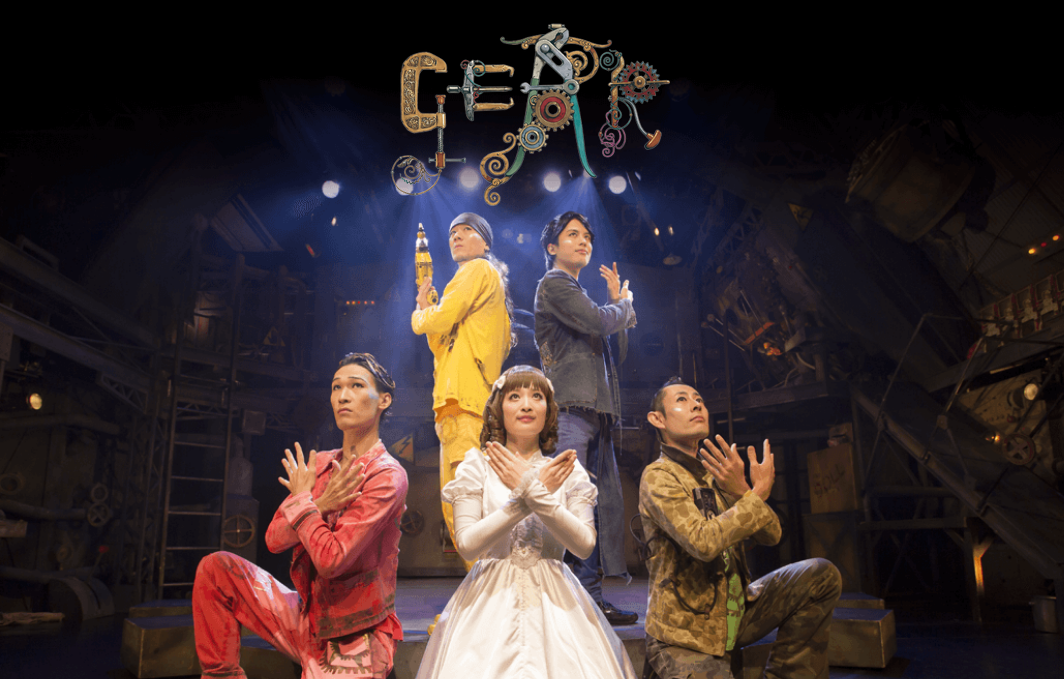
One of the cast arrangements from GEAR, sourced from gear.ac

I can’t say that I’ve been to many plays in the past, but when I think theater, I expect Shakespearean plotlines with a protagonist/antagonist combo, the changing of scenery, and large casts. GEAR, performed on the third floor of the Art Complex 1928 in Kyoto, had none of these elements. What I got instead was a novel fusion of a wide array of modern performance elements nestled within a traditional Japanese story arc much unlike what I’ve seen prior. The performance took a very traditional style of theater – nonverbal performance on a single set with a traditional Japanese story arc of impermanence – and brought the art form into modern culture through a use of a futuristic story setting as well as modern dance, music, lighting effects, an elaborate stage, and other entertainment forms not generally seen in theater, to bring classic elements into a production fit for an audience of diverse ages and backgrounds.
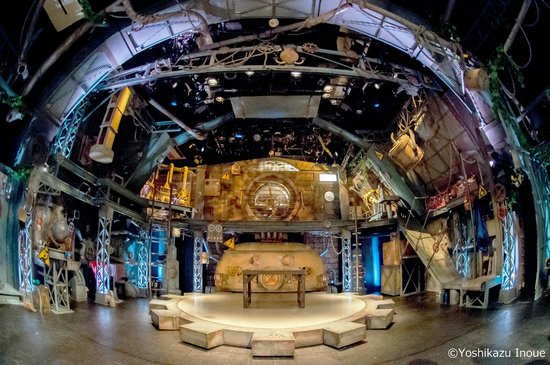
The stage where the entirety of the 90-minute play is performed. Sourced from tripadvisor.com

The play establishes the setting through a small amount of narration in the program booklet and a sequence at the start of the play, where four factory robots emerge in a run-down factory clearly no longer in proper production and begin to perform their daily maintenance and production routines – clearly unaware of the futility of their work. They stumble upon a single doll box with the product still inside (evidently the object historically produced in this factory).

The doll is inadvertently unboxed, and a magic trick is performed to seamlessly replace the doll with an actress – the doll having sprung to life in the story in a similar magical manner as to how the inanimate doll was replaced with a person.

The doll resists being put back into the box and begins causing mayhem in the factory as the robots struggle to return her to her box. Through her mischief, she sparks each of the four robot workers, one by one, awakening in them a seemingly newly discovered joy of play. Through these awakenings and corresponding acts by the robots (and eventually one by the doll herself) are heavily accentuated with modern music and elaborate projections and lightshows.
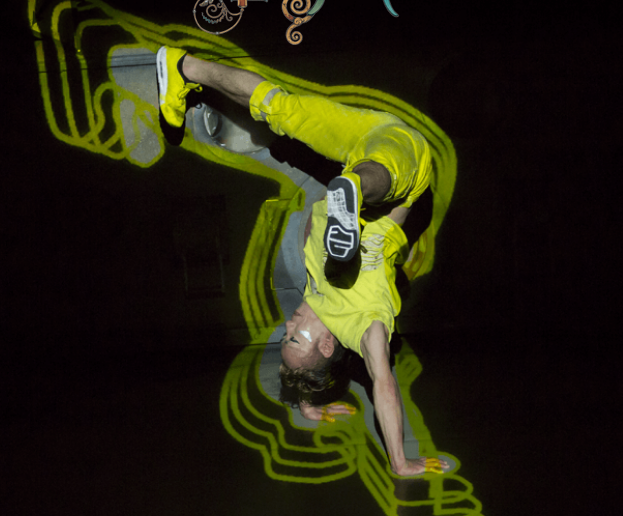
The breakdancing ‘robot’, complete with accentuating projections for his movements. Sourced from gears.ac

Each worker performs an act dramatically different from each other once they are ‘awakened’. First, the yellow robot erupts into breakdancing alongside a modern soundtrack and a corresponding lightshow that accentuates his actions, as will prove to be the theme for all of the following ‘play sessions’. The next robots all follow the same basic formula – coming in contact with the doll and suddenly bursting out into an act unique to them. The other robots perform acts with miming, juggling and magic. The doll performs the final act with a dance routine heavily accentuated with elaborate lightshows and projections.
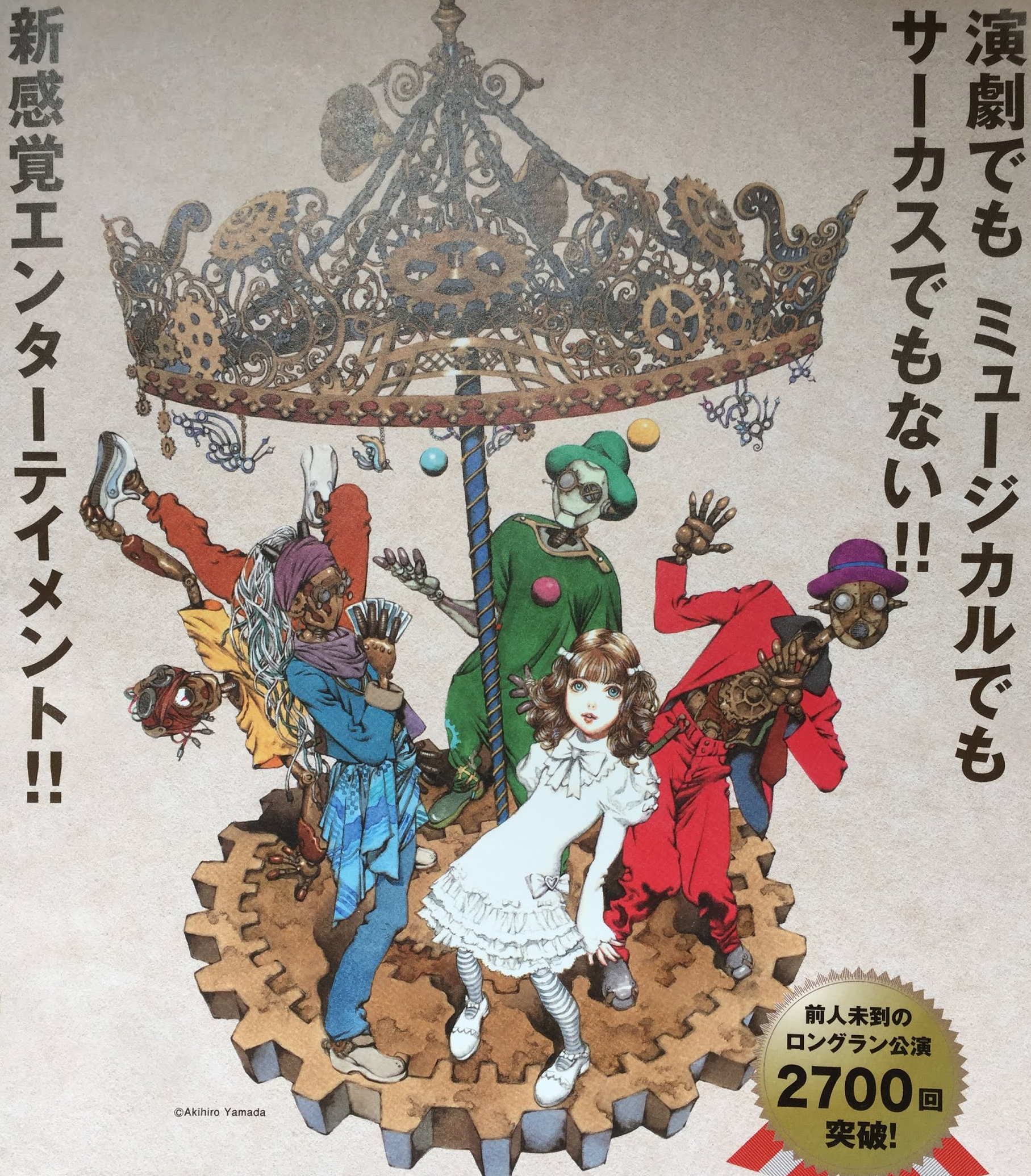
The cover of the booklet given out at the venue that portrays each of the robots’ styles.

Finally, the robot’s and doll’s play go too far. They inadvertently hit a button that causes mayhem and malfunction in the factory as a sort of finale to the show. At the end, the robots are all shut down, and the doll is left alone – overcome with sadness at the loss of her new friends. She attempts to wake them and cries out, but to no avail. She eventually returns to her form as an inanimate object as the next day begins and the robots awaken once more to perform their daily tasks.

The play highlights a common theme in Japanese narratives: mono no aware. It’s a concept that things are more beautiful because of their transient nature – ‘that all good things must come to an end’ to draw an English parallel. The brief period of play and joy was brought to an abrupt and sad end, mirroring a lot of other Japanese narratives and even plays into the emphasis on cherry blossoms, which bloom for only a few weeks out of the year. The short time the doll and robots played highlights the beauty of their circumstance.
The Manhattan Bar: High Class Americana in Chiba

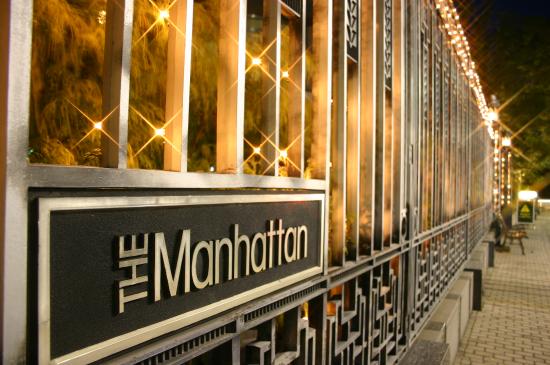
Main sign outside the Manhattan Hotel
https://media-cdn.tripadvisor.com/media/photo-s/0b/8b/27/1a/caption.jpg

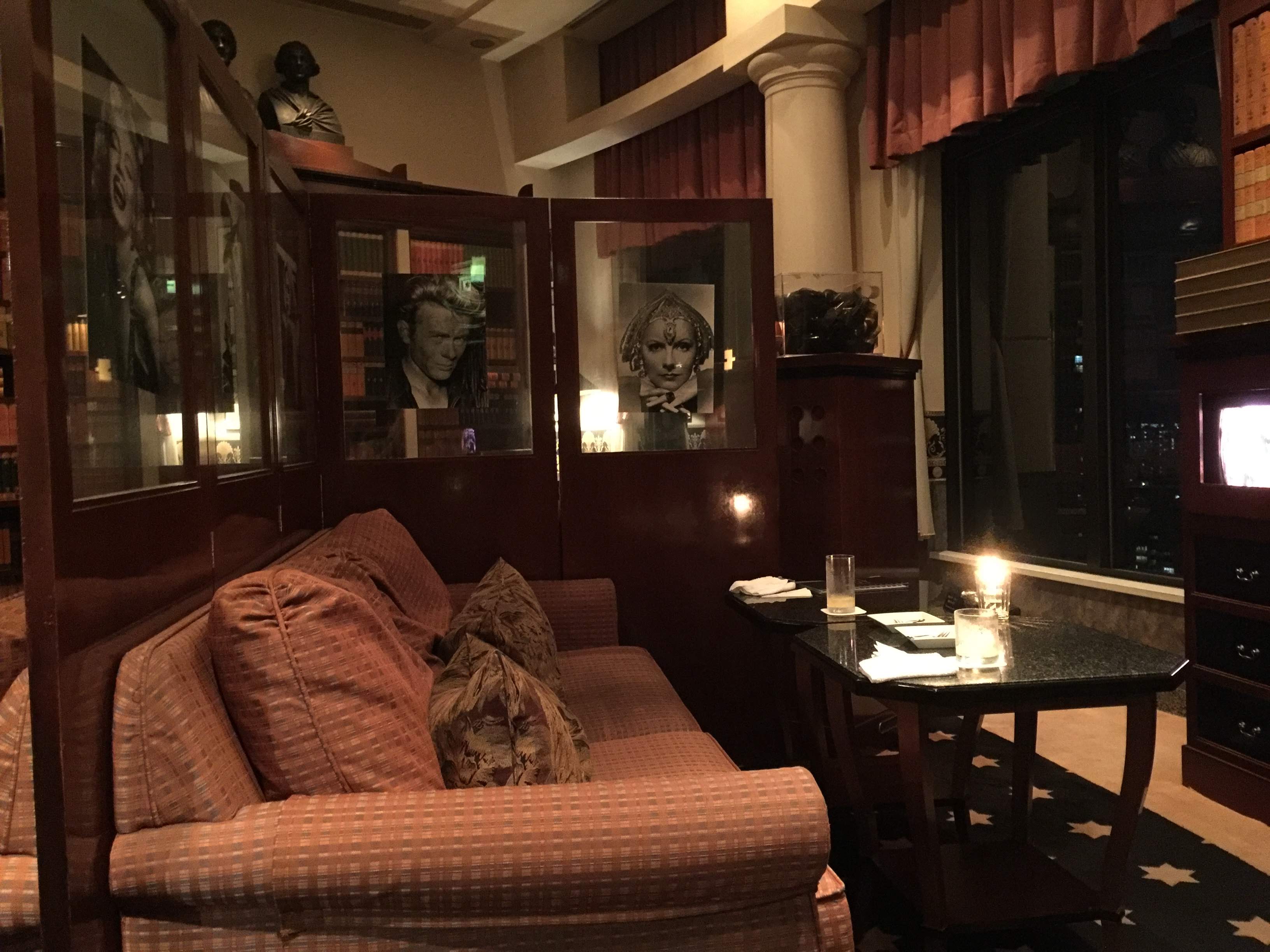
One of the most subtly unique locations I’ve visited in Japan is a 21st floor bar in Chiba called The Manhattan. At first glance, the establishment is a run-of-the-mill expensive bar for cocktails and spirits, but as one sits and begins to really drink in the surroundings and decorations, it becomes much more interesting.

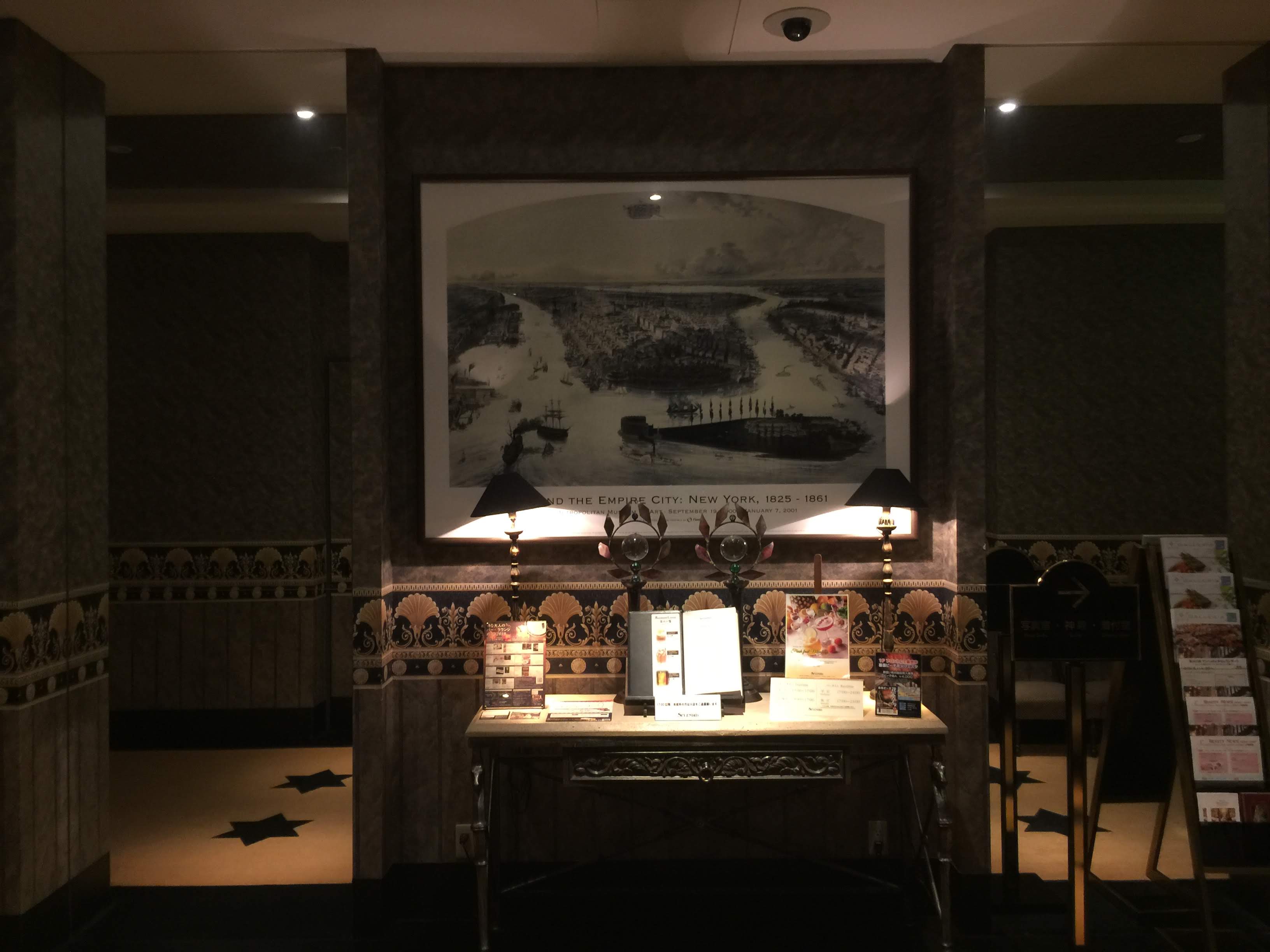
A display depicting New York City circa mid 19th century along with an ironclad warship.

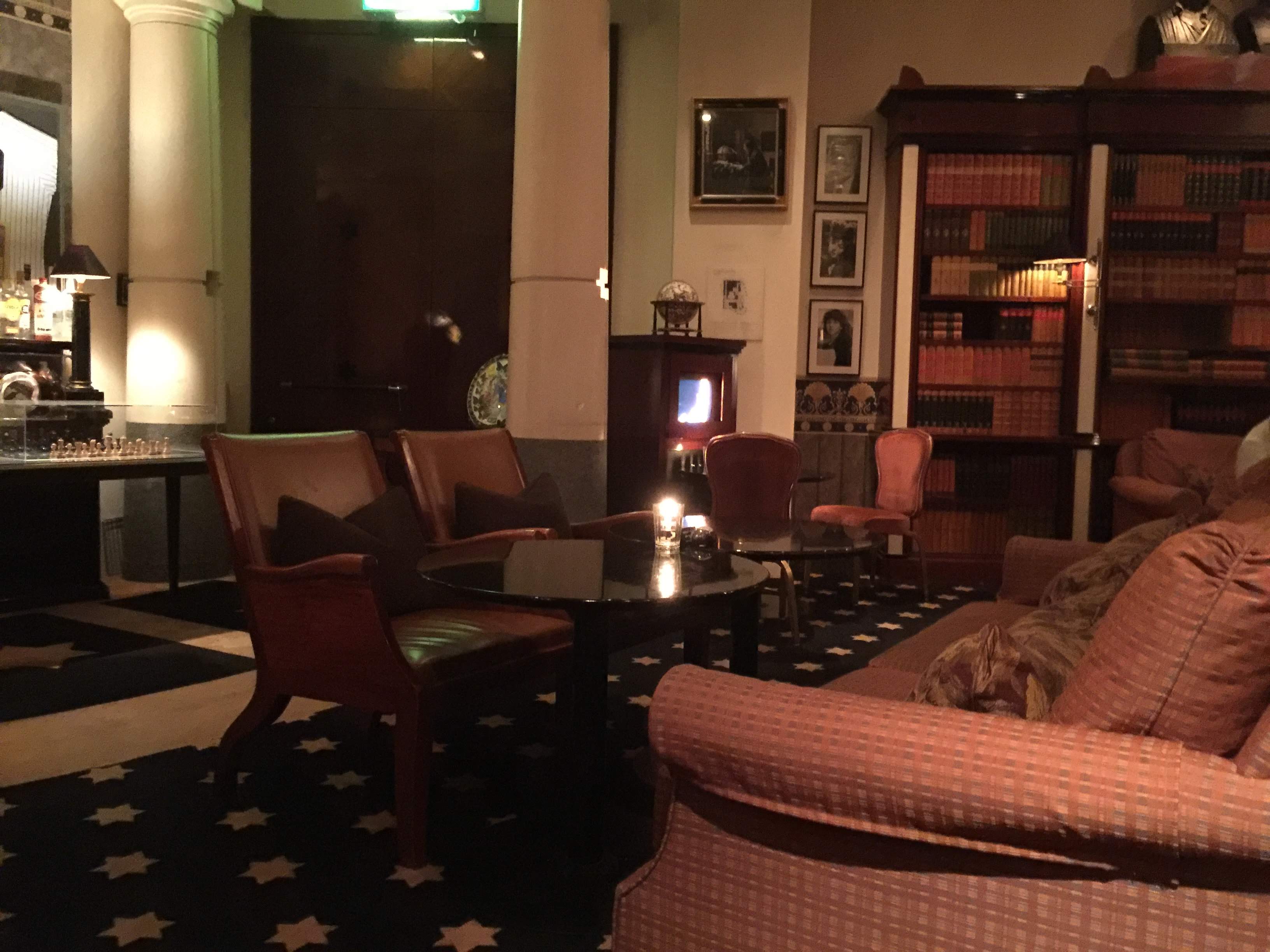
The bar is rife with decoration from the United States, though the representation of Manhattan specifically is not necessarily the actual focus. What the bar is filled with, however, is photos of early film superstars, such as Marilyn Monroe, old tube TVs playing ‘Old Western’ films with Japanese subtitles, and the décor of a city penthouse living room from the 1950’s United States. Large books line the walls in between enormous windows that provide beautiful views of the surrounding cityscape.

The bar itself was not very large and was not the seat of choice for the dozen or so people in the fairly small establishment. The bartender was quite skilled, as evidenced by the dozens of cocktails offered on the menu and the measured, accelerating rhythm of a Cobbler shaker that can often be faintly heard across the establishment. The bottles behind the bar were somewhat sparse – primarily reflecting a few choice brands of high-end whiskies and gin and certainly not reflecting the full variety of offerings in the drink menu. This lies in stark contrast to many bars, which prominently display the range of offerings available to patrons at the bar. This appears intentional – the focus at this bar is not the bar itself, but the homey-yet-affluent atmosphere carefully cultivated by the displays and layout.

Adjacent to the bar area is a collection of seating arrangements that are each somewhat unique in each their own way. A few tables with two seats facing each other with a small table are the first that one finds after passing a divider for the bar area. These are the most standard tables to be found, but each one still has their own flavor. Some tables have ordinary high-back chairs, some have cushioned armchairs, and some a mixture of both. The décor around the tables also varies. Some tables focus on an Old-Western-playing-TV (including one with the TV practically on top of the table) while some focus on the picturesque view out of the large windows.

A living room, inside a bar.

In addition to the somewhat standard seating arrangements, there are several sections where the living room aesthetic is more heavily pronounced. There are three sections where couches replace the chairs and the usual table is replaced with a knee-height coffee table. One seat faces a TV with a window next to it while the other faces another couch (this location was used for what appeared to have been a business meeting). These are the most characteristic sections in the bar, where the ‘penthouse living room’s aesthetic is maximized.

Another living room-esque setup, with a seating arrangement around an old TV and numerous other decor in the background.

It’s interesting that a bar would emphasize this mid-20th century Americana aesthetic. I imagine it’s related to the prominence of American culture in Japan directly following WWII, during U.S. occupation of Japan where we invested great effort to reform their government and popular culture. It’s possible that this culture was embraced by some, or at least reminds them of their youth, which draws them to this otherwise pricey bar. It also really emphasizes a sense of elegance and affluence through its prominent displays of cultural icons and shelves of large tomes alongside classic movies. Though, even as an American who is even somewhat unfamiliar with the American culture on display, the Manhattan is a fine place to grab a quiet drink.

Miyajima: Nature and Elaborate Shinto Sites

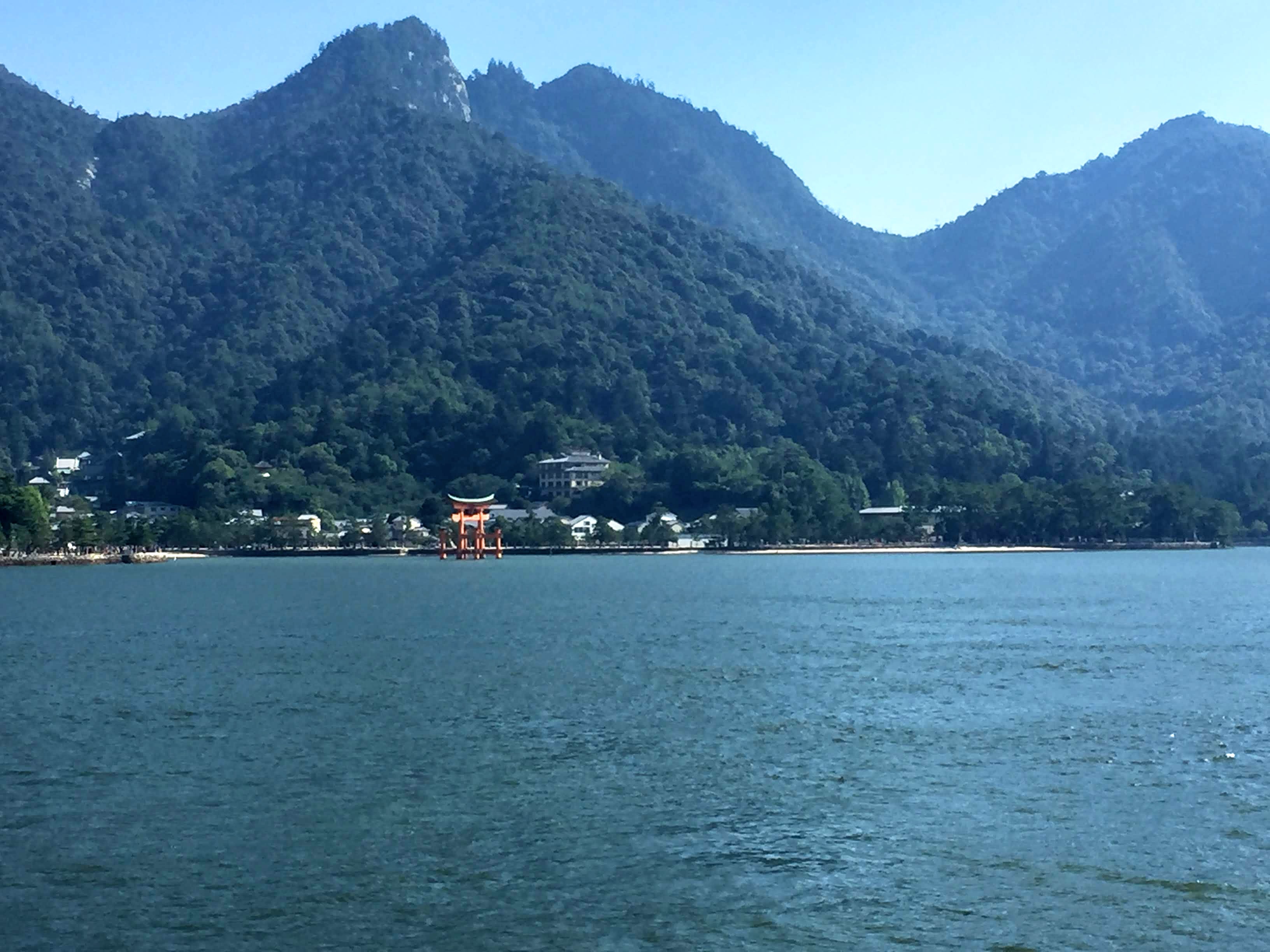
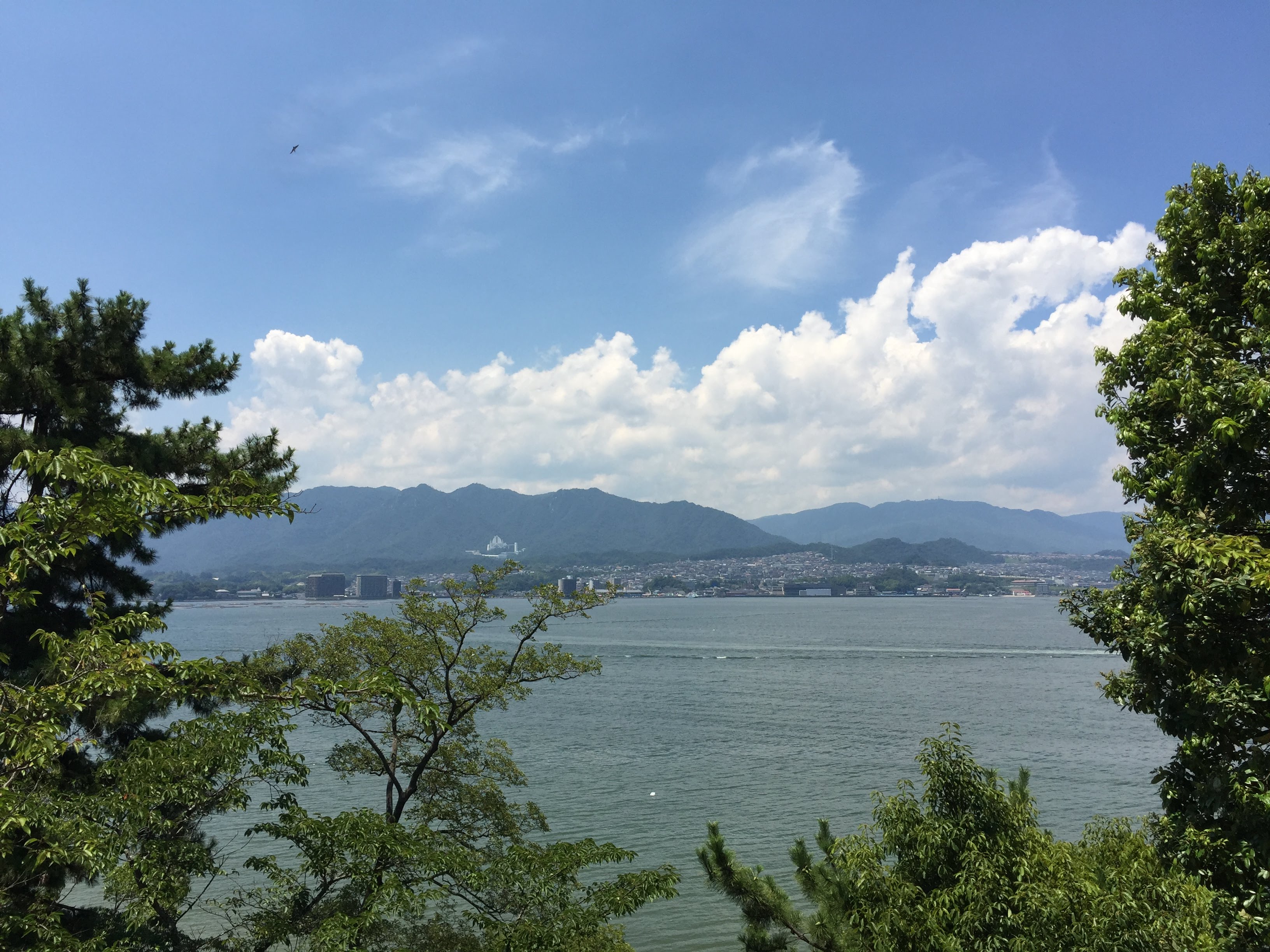
A view of Miyajima Island from the ferry with a view of the huge Torii gate off the coast in view

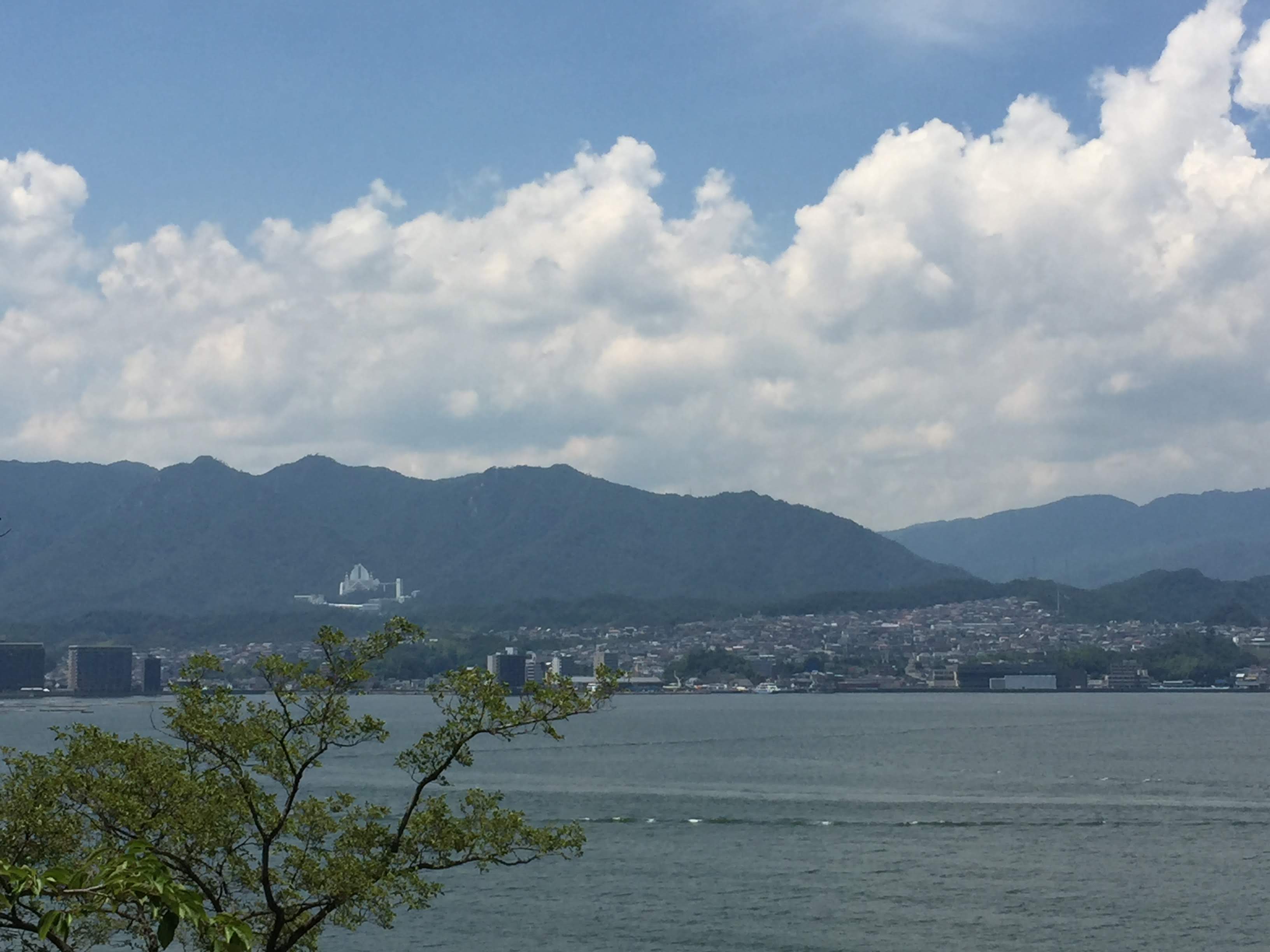
My time in Japan thus far has been mostly spent in and around major metropolitan areas where the horizons all consist of giant buildings and monuments. It was refreshing to see another side of Japan on the island of Miyajima, where mountains and sea coast replace the skyscrapers I have been used to thus far. It was also particularly interesting because of the prevalence of Japanese tourists visiting the island alongside us and to see areas that were not particularly designed to be English-speaking-tourist-friendly. The island presented a particularly distinct type of Japanese culture that is unique from what one finds in the busier districts of Tokyo and Hiroshima, where there is an emphasis on nature and Japanese historic culture (particularly the Shinto religion).

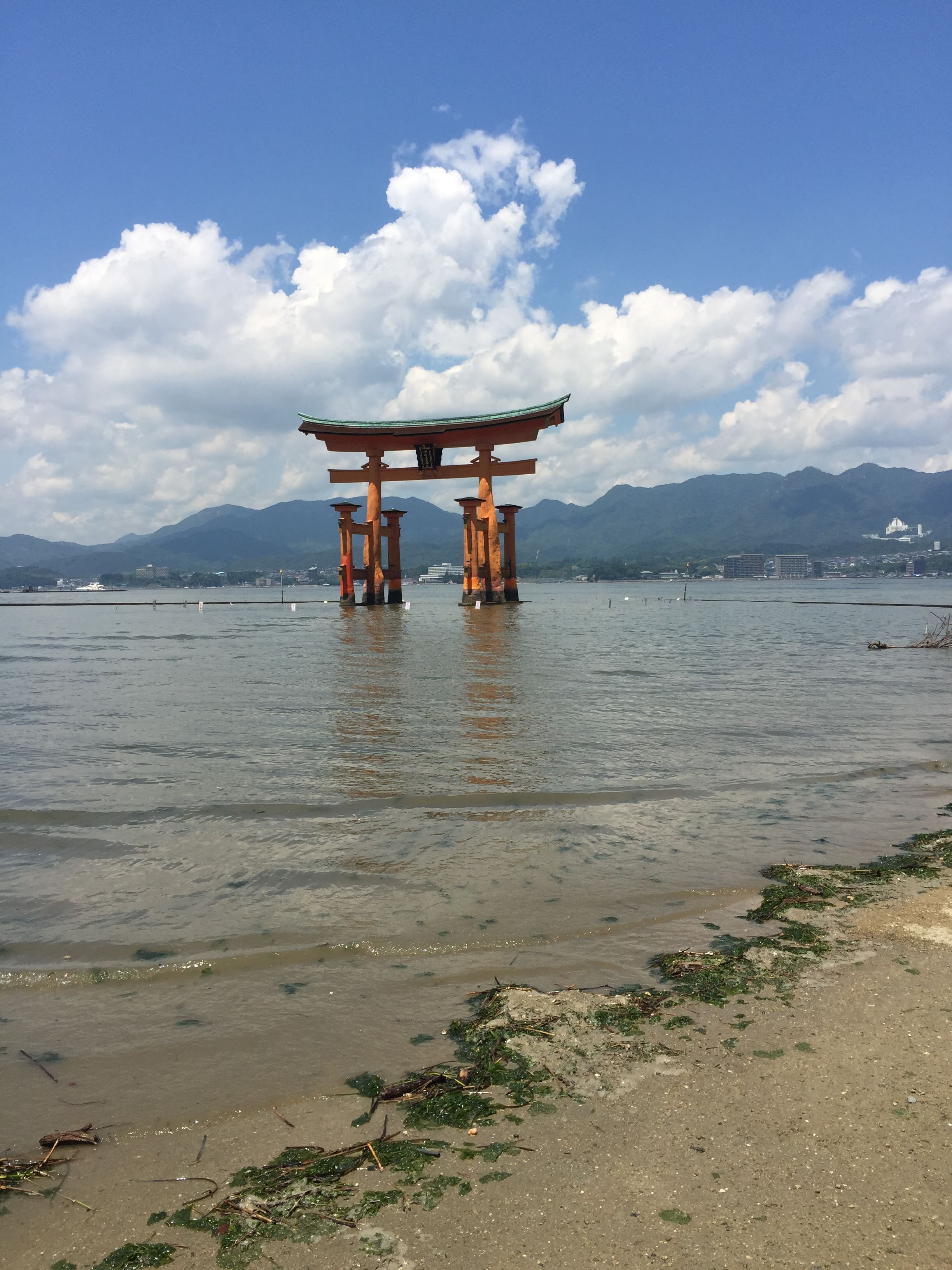
View of the huge Torii gate from onshore

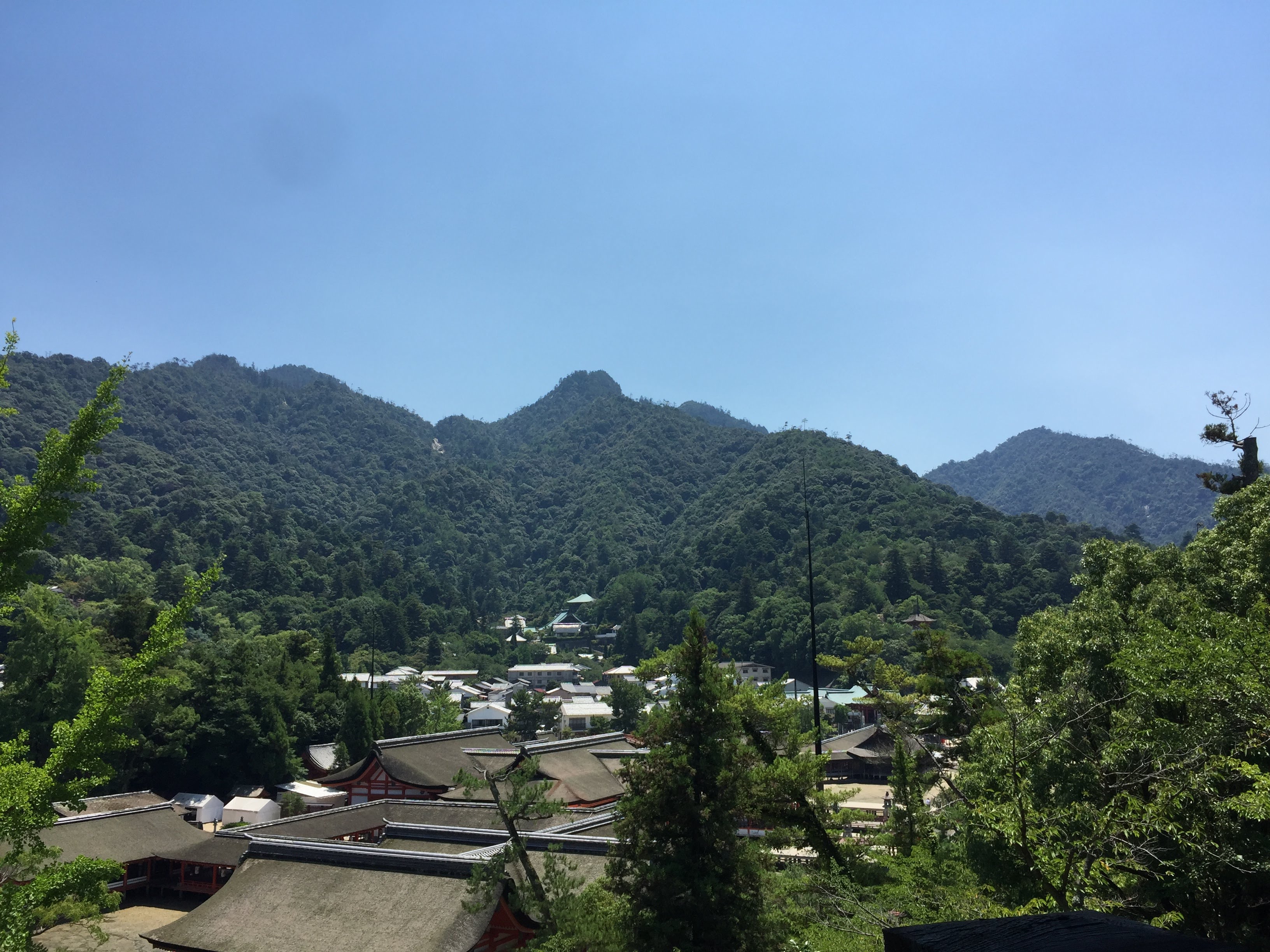
The name Miyajima literally means “shrine island” in Japanese, and even before you arrive via the ferry you can see a large Torri gate offshore. Most of the island appears to be wilderness, except for the docks and collection of shops and restaurants nearby at the base of the mountain. It was quite hot and humid, but the weather otherwise was fantastic for walks outside.

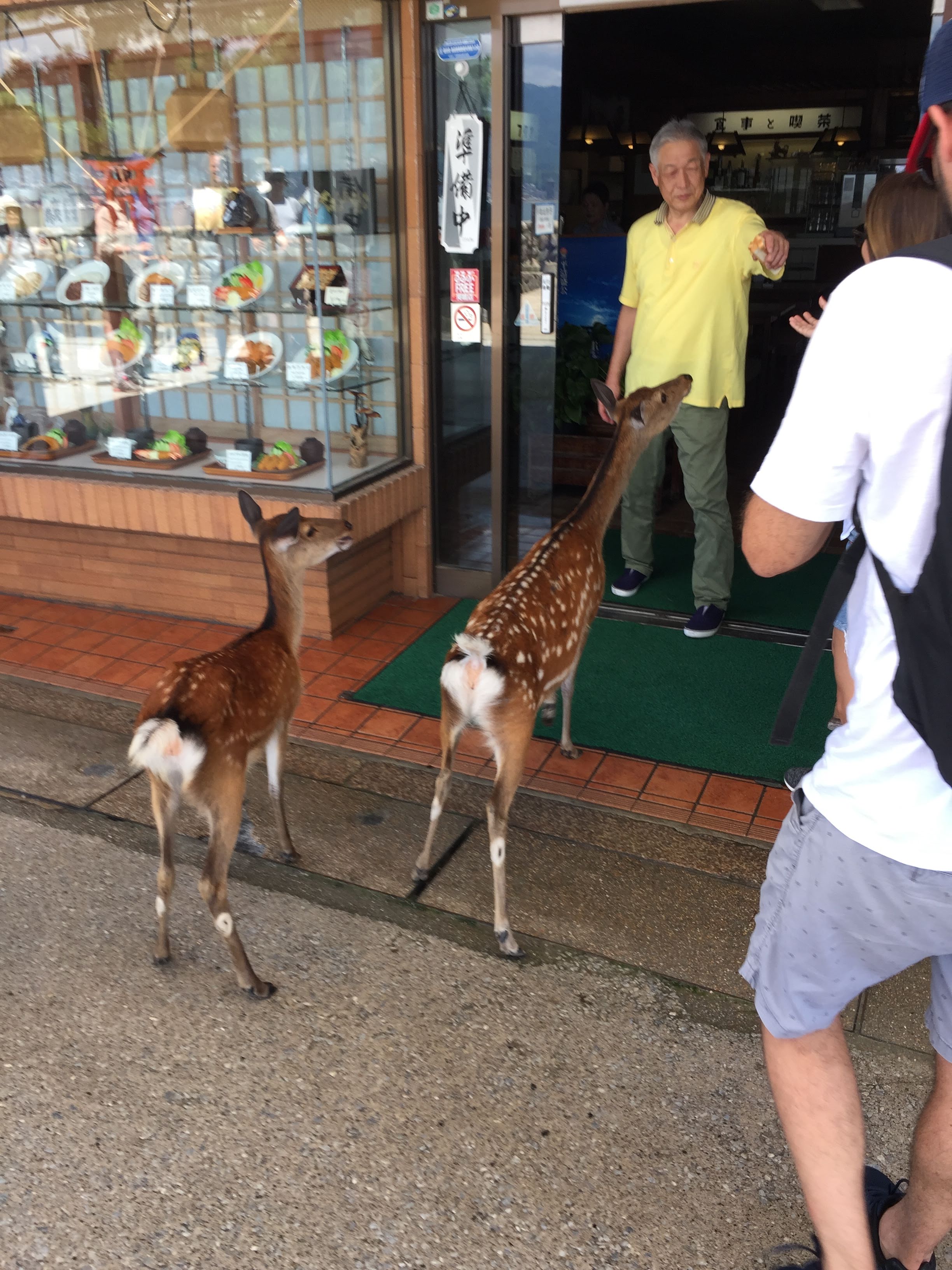
Deer are everywhere once you get off the docks. They’re not at all shy and are definitely used to being around people and look towards them as a source of food. I’ve never seen a deer so up close before, so it was fascinating to see them just chilling out with crowds of people around them. I pet them and enjoyed hanging out with them until I found some that were a little more aggressive than others in their desire to get food out of you.

The deer also have an obsession with plastic bags and other trash and have a bad habit of trying to eat anything they could find. When I crouched down to one to try and get a picture with one of the deer we came across, he immediately poked his head into a pocket of my backpack and yanked an empty bag I was carrying around to put trash in and started trying to eat it. He did not appreciate me trying to stop him from doing this but luckily did not feel the need to try and bite me or use his antlers.

All the deer I saw were juvenile and still had spots on them, but many did still have sizable antlers. The same deer that tried to eat my bag followed us around for a little while we got some food. During this time, he was mildly aggressive towards other deer that tried to come around, presumably trying to gain exclusive access to any food we had to offer (which was none, as this deer sucked). He also bit someone’s shirt and used us as scratching posts for his antlers, which was annoying. This guy pretty much killed the fascination with deer for us and we never ended up feeding any, coming to the conclusion that it’s pretty much just encouraging bad behavior.

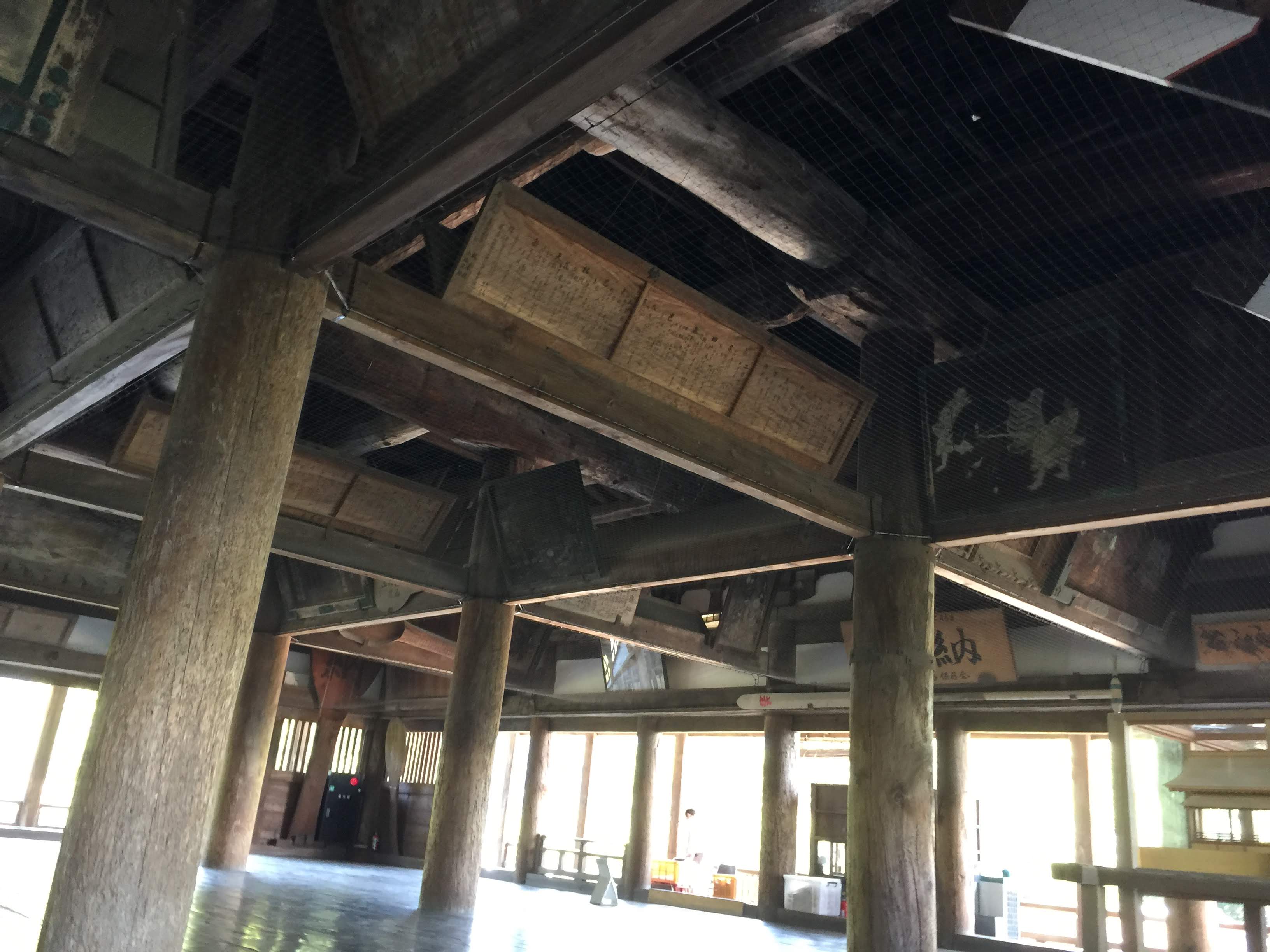
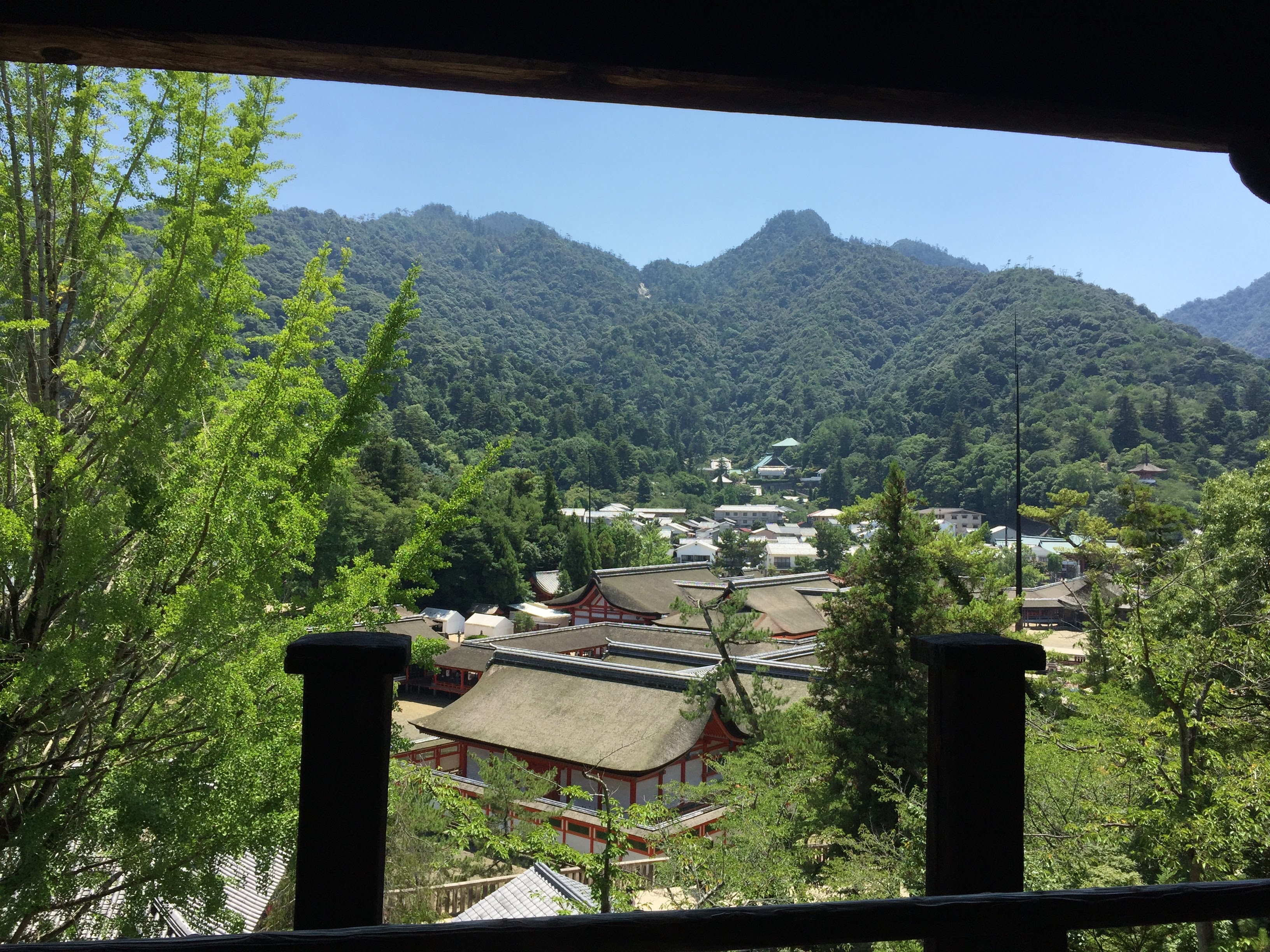
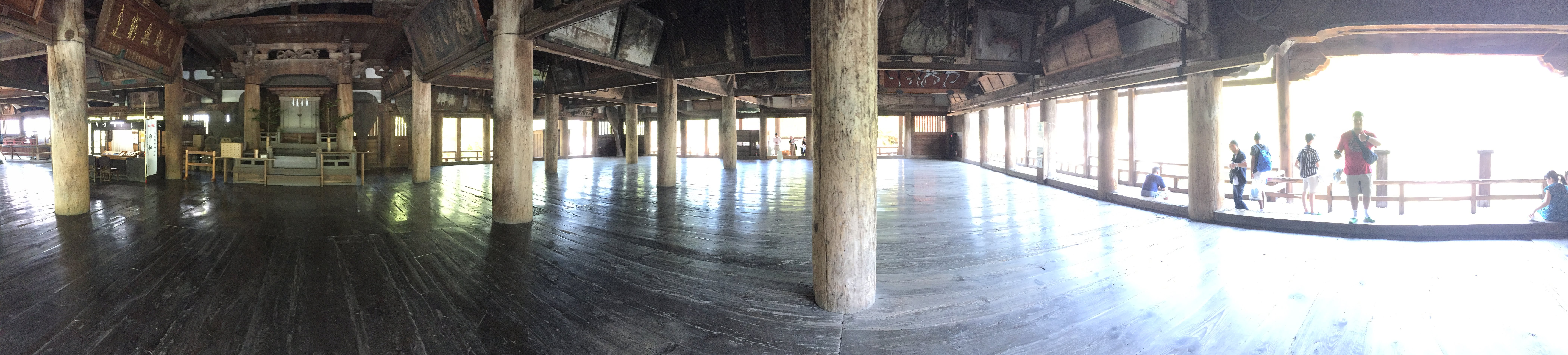
In addition to some overly pushy deer (that were pretty fascinating nonetheless), the island also had numerous shrines and paths through nature. At the top of a hill there was quite a large shrine that was built with gigantic tree trunks and had an incredible view of the surrounding area. It cost 100 yen to enter and you had to remove your shoes, but it was definitely worth it for the views alone. The shrine itself was inexplicably calming and we were accompanied by a number of elderly Japanese couples just enjoying the quiet atmosphere, very old looking paintings, huge rice paddles and views of the surrounding area.

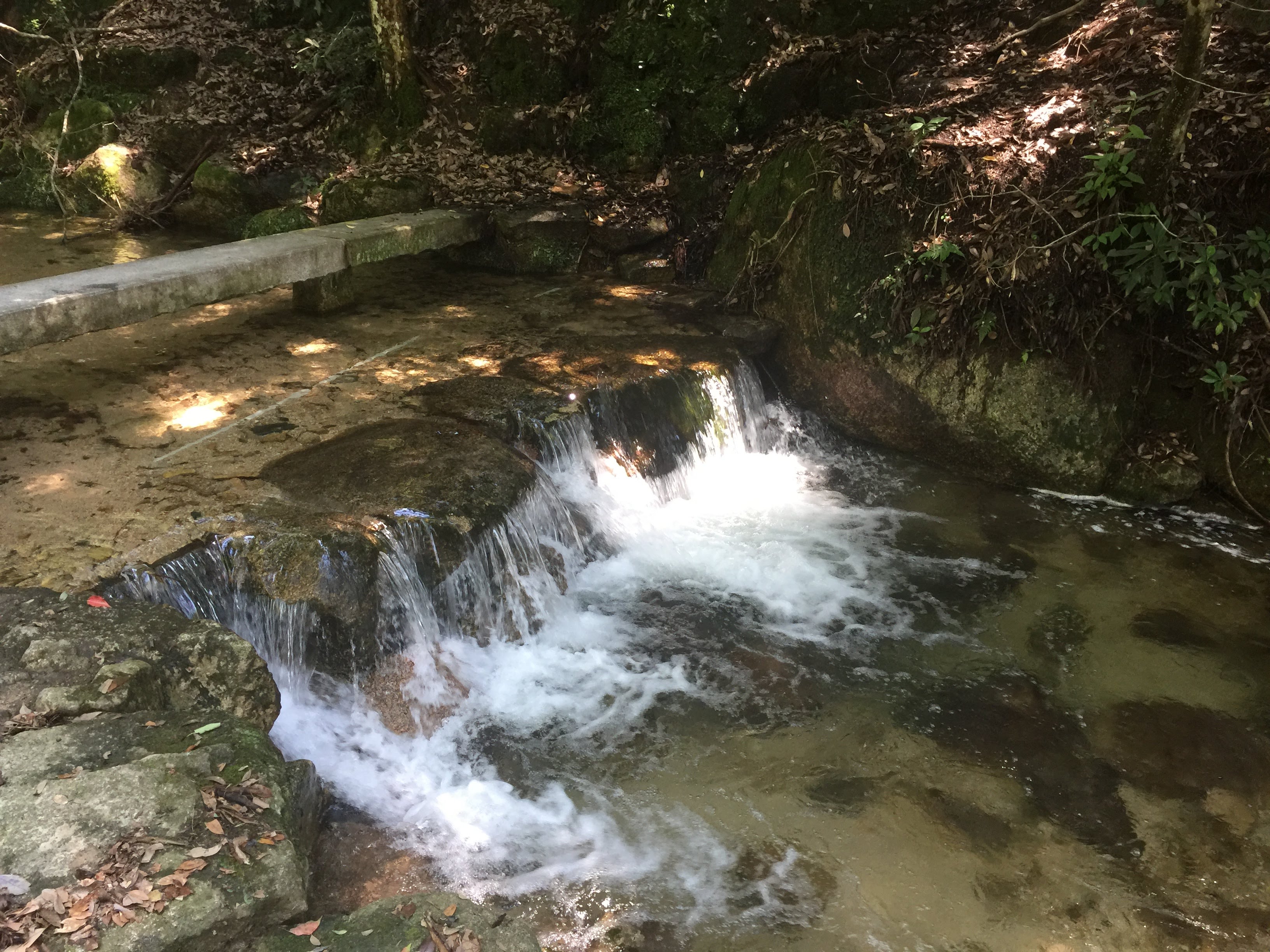
One of the larger of many waterfalls along this river path

We also traveled through a beautifully serene pack along a river filled with waterfalls, at least some of which were at least partially man-made. There were also stone walkways across the river which gave great views of the waterfalls and a few scenic arch bridges. It also gave us an opportunity to splash our faces with some cool water, which was fantastic.

The island was a fascinating peek into Japanese domestic tourism. There were some additional Shinto-based attractions, such as a sacred rope park, that we did not get around to seeing, but sound extremely interesting nonetheless. It’s certainly a different side of Japan than what one can see in the major cities and is definitely worth exploration.

A Serene Oasis Alongside the Chaos of Takeshita

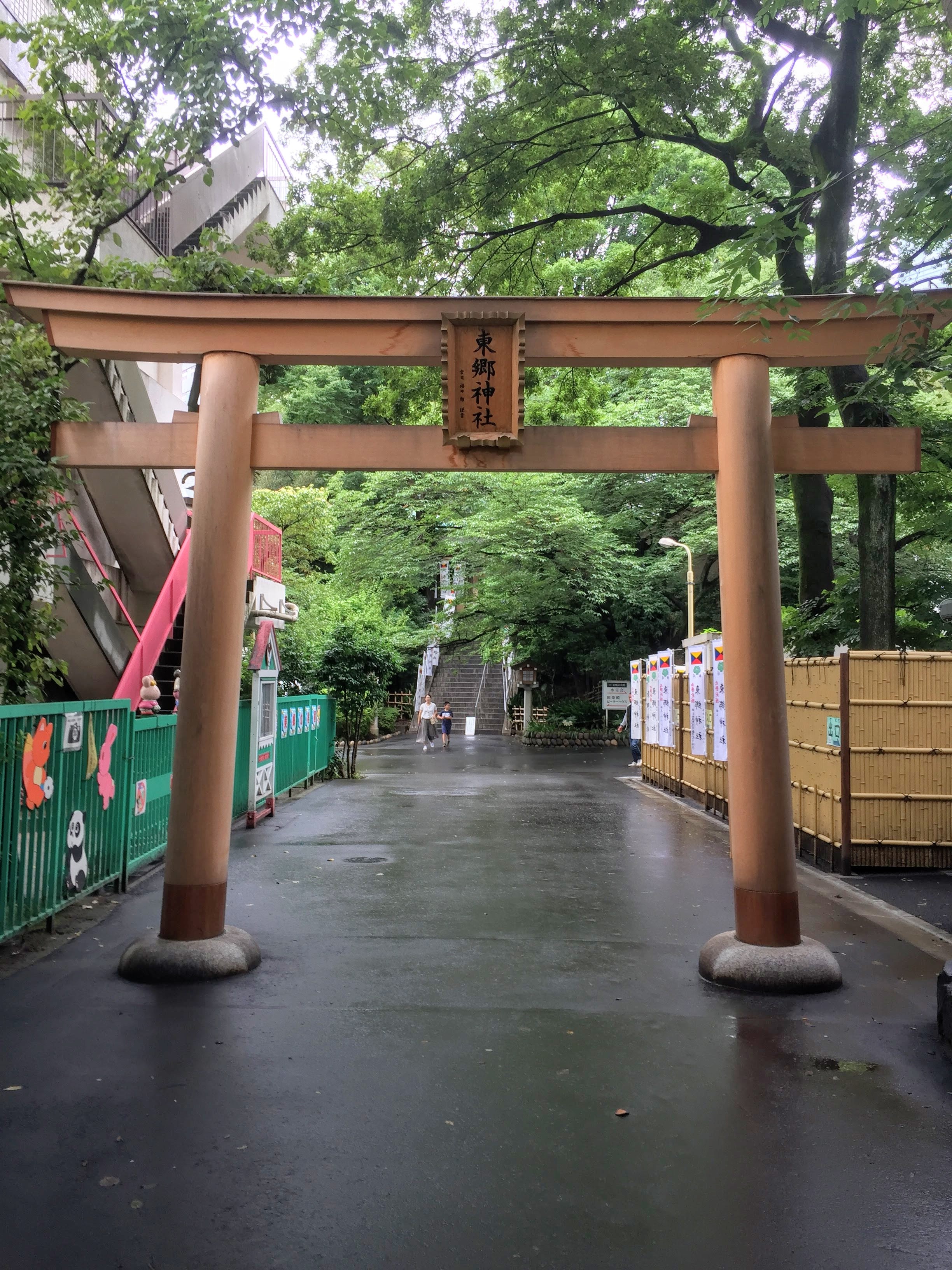
Torii gate denoting the side entrance to the Togo Jinja.

            In my short time in Japan so far, I have come across two Shinto shrines. These places of worship can be found across Japan, but the one found next to Takeshita Street was particularly striking. A hundred meters away from the packed, bustling streets of shops and pedestrians, the atmosphere shifts dramatically. Suddenly, few people can be found, and the area becomes nearly silent. Pass under the Torii gate pictured above and walk up a set of stone steps and it seems like you’ve entered another world. I wondered how such a stark contrast is preserved.

            This shrine is known as the Togo Jinja shrine. There is nobody there to maintain the shrine or watch over it, yet the space is immaculate – giving the impression the kami itself maintains the space. This location contained a number of features common to these shrines, each containing its own purpose.

            Shinto shrines are places of worship that can be found across Japan, and while the structures found at them can vary dramatically, Torii gates are one of the most commonly present. They represent entrance to a sacred space and they intuitively invoke a sense or importance even to someone without an understanding of the religious ideas they represent.

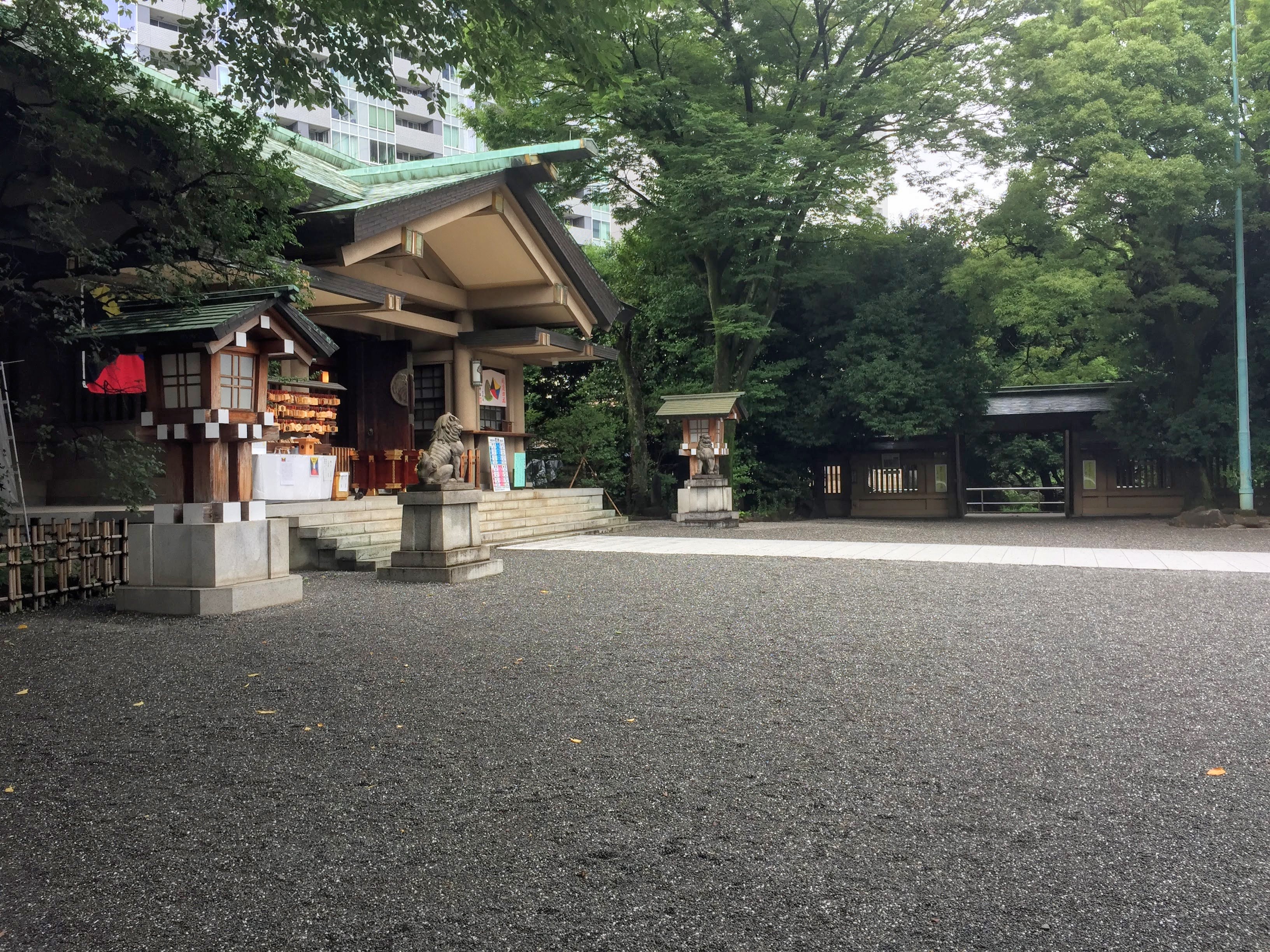
View of the Togo Jinja shrine, immediately after entering from the side gate.

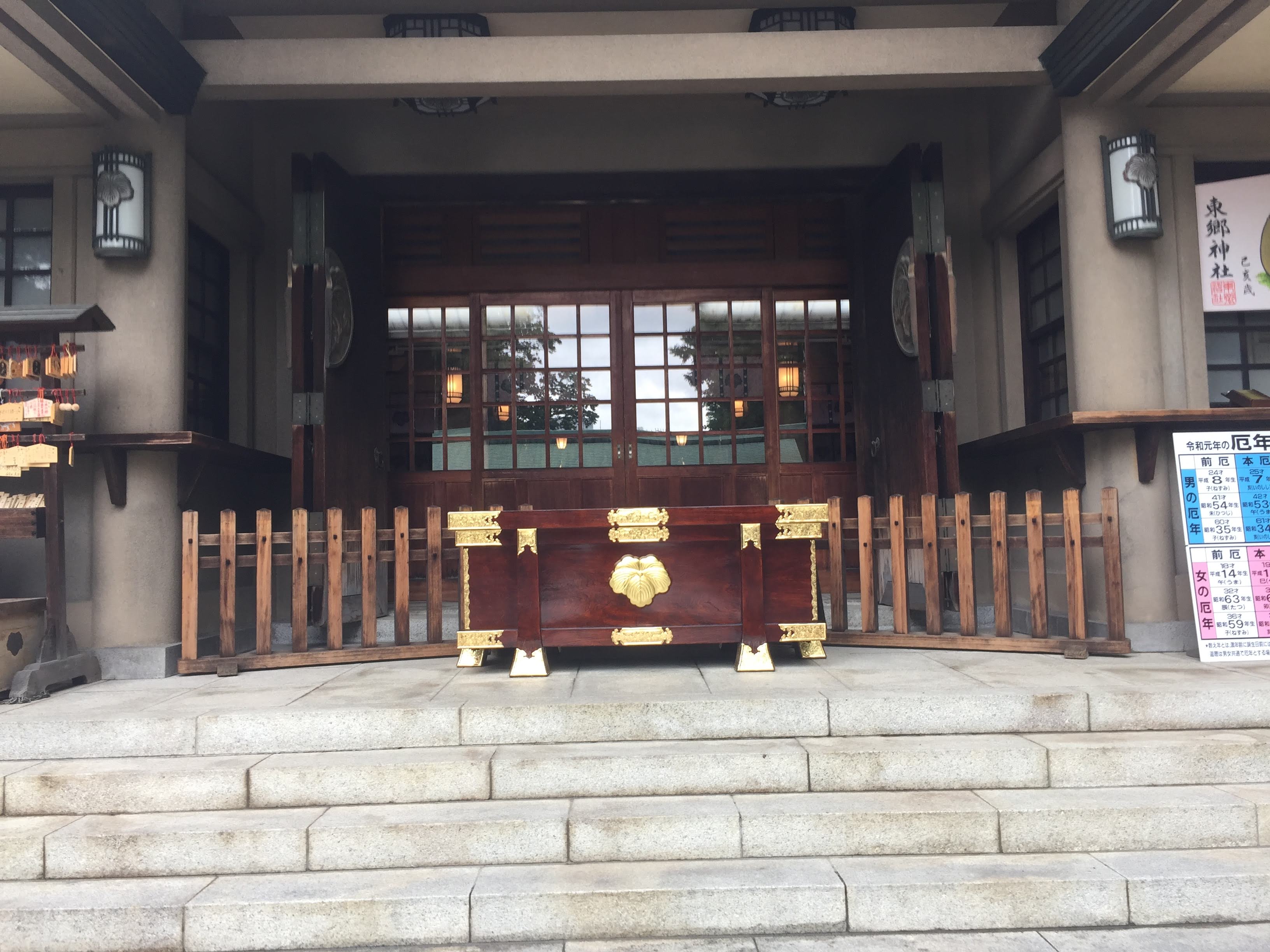
            After a significant set of stone stairs through the tamagaki, the fence surrounding the sacred inner space, we were met with an open courtyard. Here, the innermost features of the shrine are present. To the left, the haiden can be seen, where worshippers can make an offering and pray to the kami. Outside of this building is a donation box, or saisen-bako, where one tosses money before making a ritualistic prayer to the kami inside.

The haiden of Togo Jinja, with the ornate donation box featured in the center.
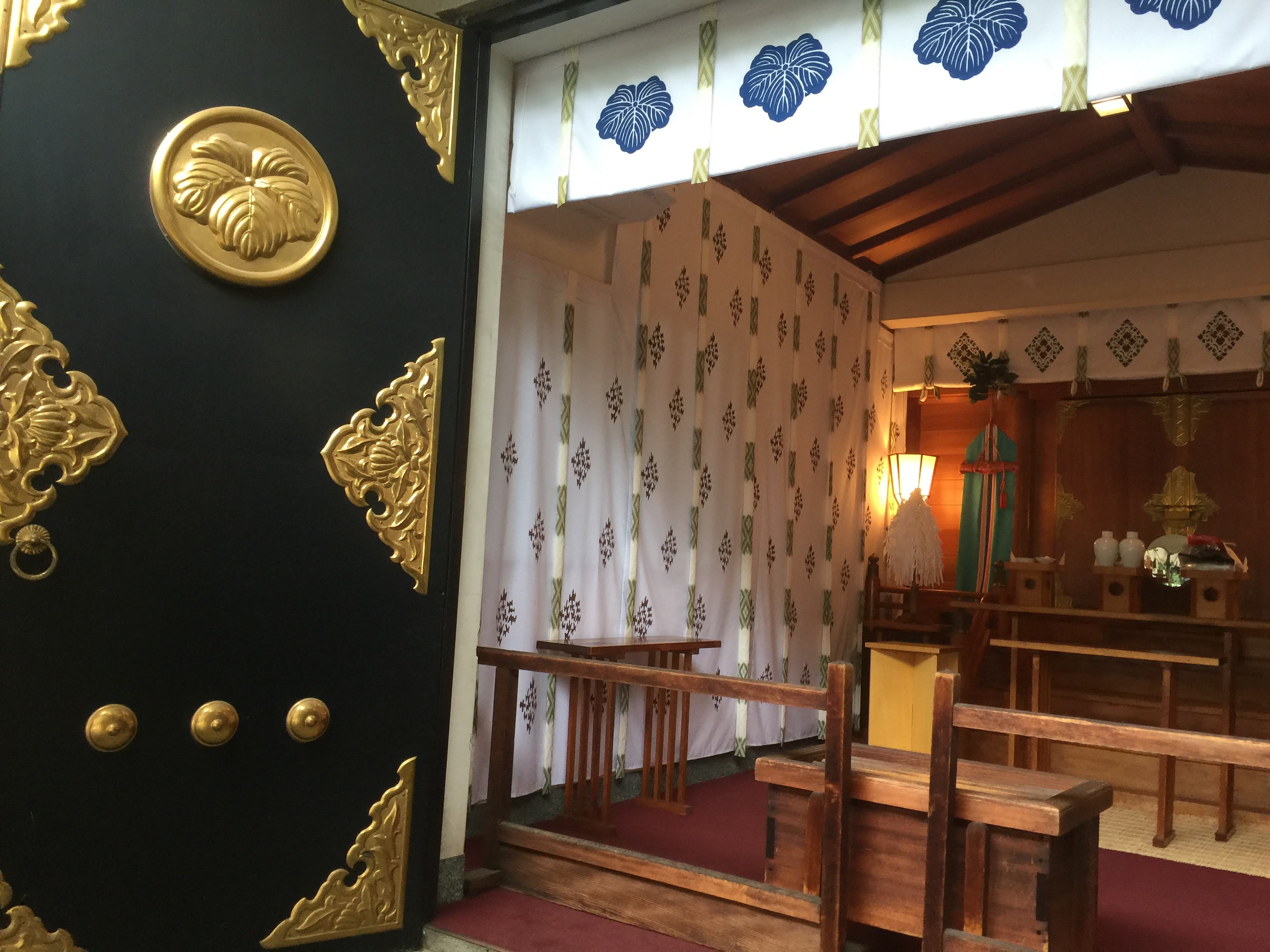
The honden, where the god of victory kami live in Togo Jinja

Above are the haiden and honden, which are not always separate, however they are in the Togo Jinja shrine. The honden, where the sacred objects that house the kami are kept, is off to the far left, out of frame of the courtyard image above.

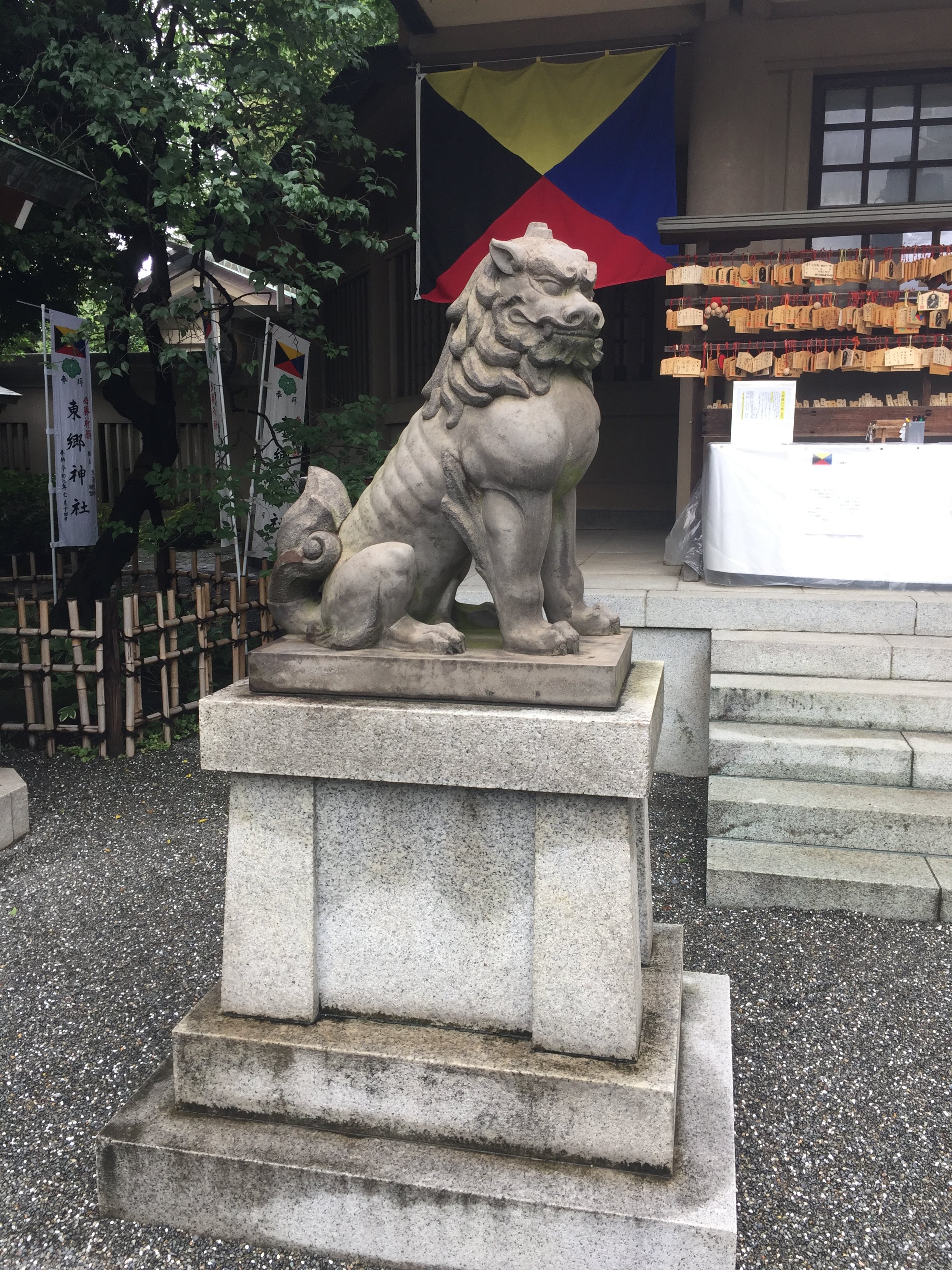
            The lion-dog (shishi) statues outside the haiden are known as komaindu and are believed to ward evil out of the temple. One shishi is intentionally depicted with its mouth open in a silent “a”, while the other is closed in a silent “um”, to represent a perpetual sacred Buddhist utterance of “aum”.

Shown here behind the komaindu is an ema, where wishes of good fortune, such as in love or business, are left in hopes of gaining the kami’s favor.

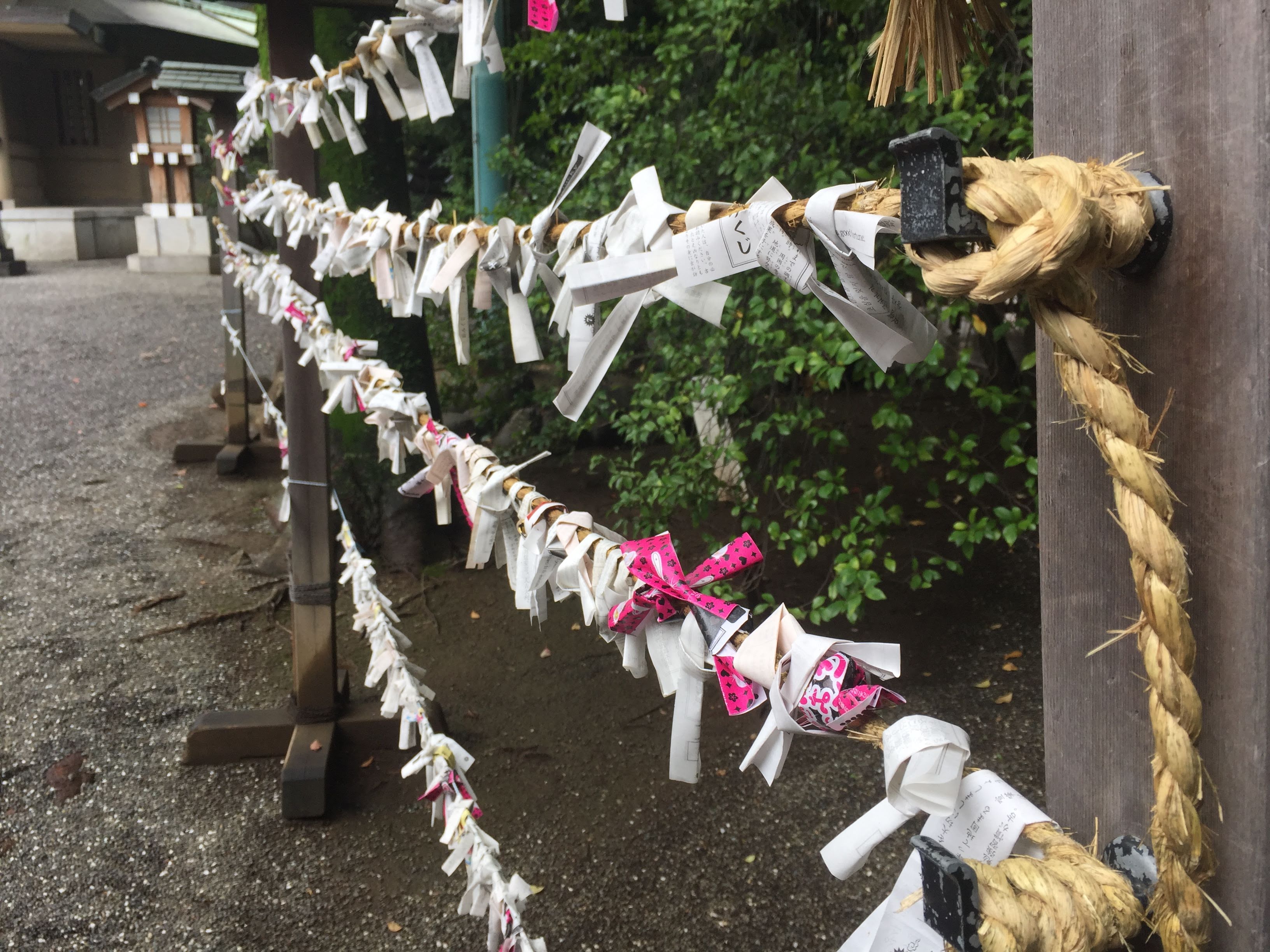
            One particularly intriguing feature of the shrine was a rope with a large collection of papers tied onto it. The papers are omikuji and are fortune-telling strips of paper, that in this shrine can be purchased by unattended boxes a capsule machine nearby. The slips can foretell good or bad luck in varying severity, but tying the slip to a tree or sacred rope within the temple is believed to benefit the receiver regardless of their fortune. Above we see a large collection of these tied to a series of ropes within the courtyard.

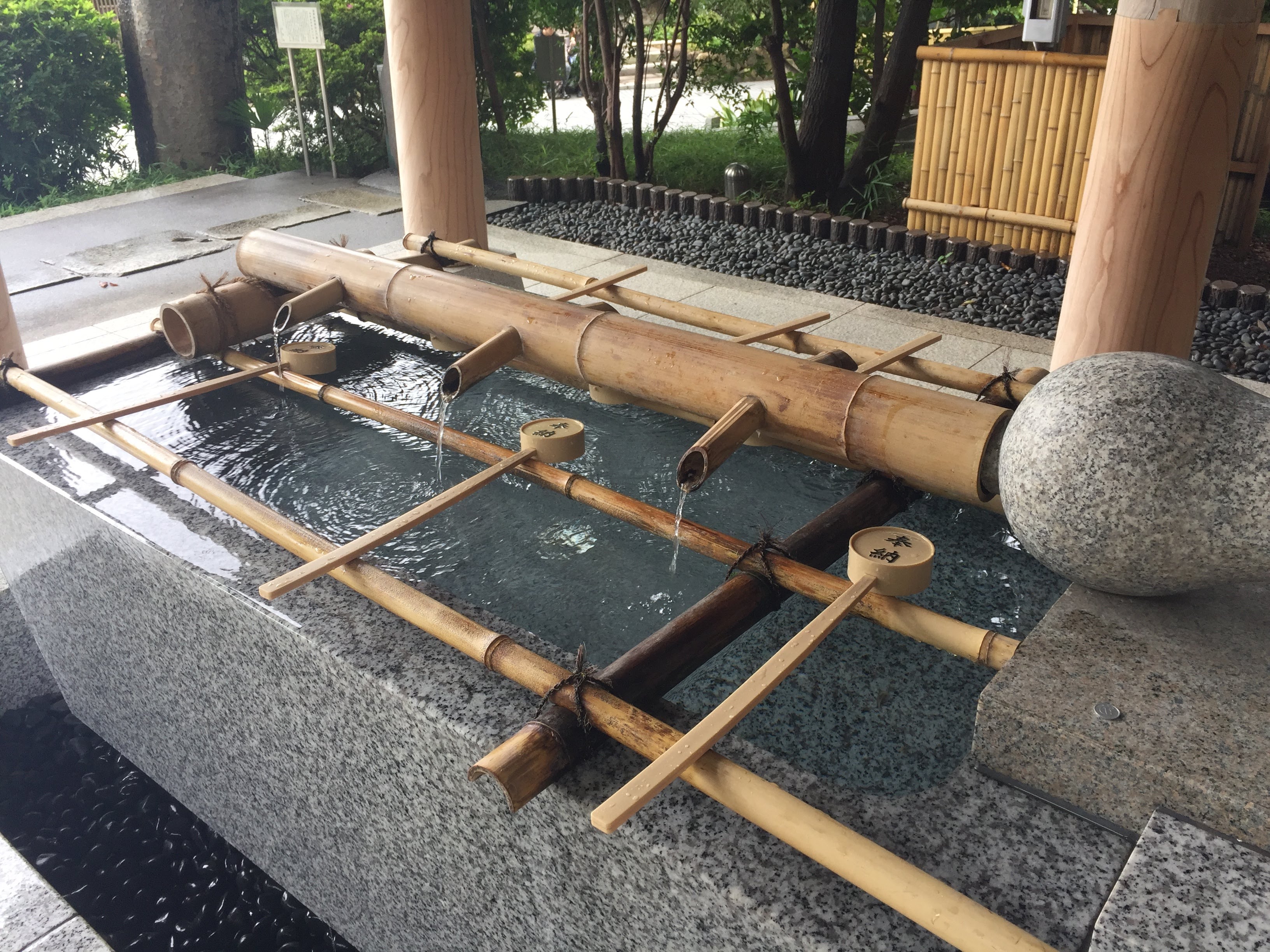
A temizuya, used to purify oneself prior to entering a Shinto shrine.

            Through the doors to the right of our original entrance, is a cleansing trough, or temizuya. I was struck by the ornate design of the fountain and the calm manner in which it was routinely utilized. These are typically fountains or natural springs and are a location where one ritualistically cleanses oneself prior to entering the shrine. The ritual most often consists of picking up the ladle with one’s right hand and rinsing the left, changing hands to rinse your right hand, changing hands again to pour water into your left hand and rinse your mouth, followed finally by tipping the dipper up to rinse the handle before placing it back. It’s important to make sure the water you use to cleanse runs out to the sides of the fountain to ensure the maintained purity of the fountain itself.

             While none were witnessed during our time here, the shrine itself is maintained by one or more Shinto priests, who routinely maintain the sacred space, collect donations, refill the omikuji supplies, and close the shrine in the evenings. Special events are held here as well, such as new years celebrations. While the stark shift in atmosphere between Takeshita street and Togo Jinja can be surprising at first, walking through the shrine and taking the time to observe the features within imparts an aura that demands respect, even for those who are not followers of Shinto.

Works Cited

japan-guide.com. “Shinto Shrines.” Japan-Guide.Com, 17 Apr. 2018, http://www.japan-guide.com/e/e2059.html.

Manabu, Toya. “Insider’s Guide to Shintō Shrines.” Nippon.Com, 2019, http://www.nippon.com/en/series/insider%E2%80%99s-guide-to-shinto-shrines/. Accessed 21 July 2019.

Ever-Present Vending Machines

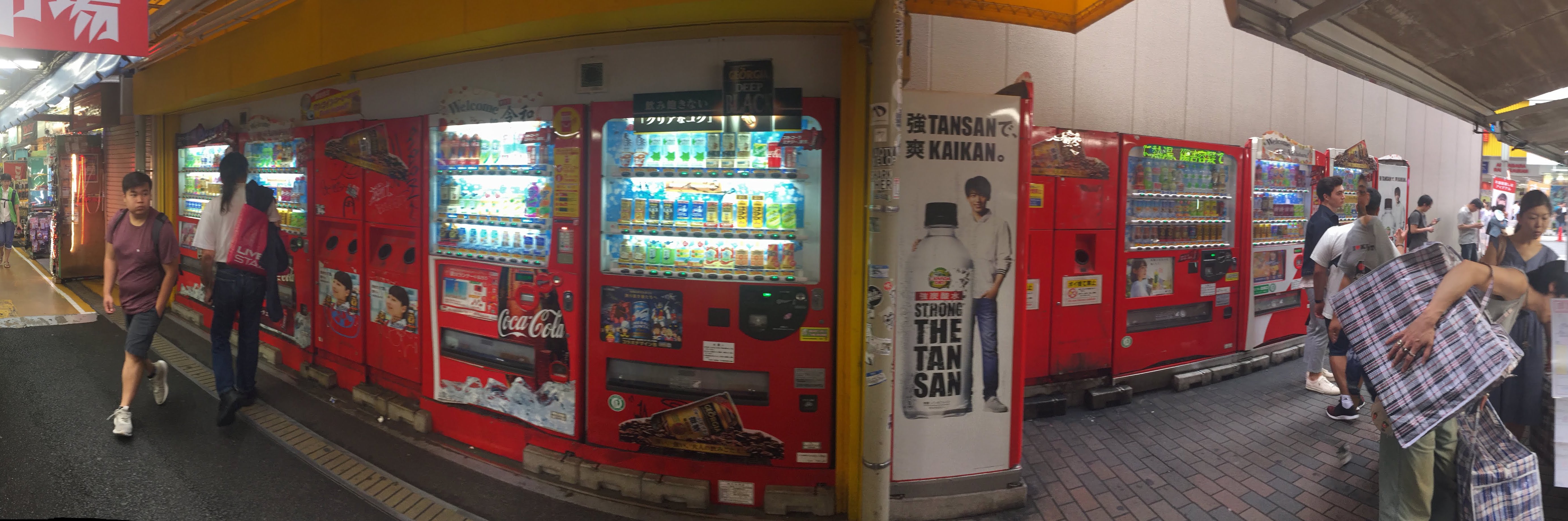
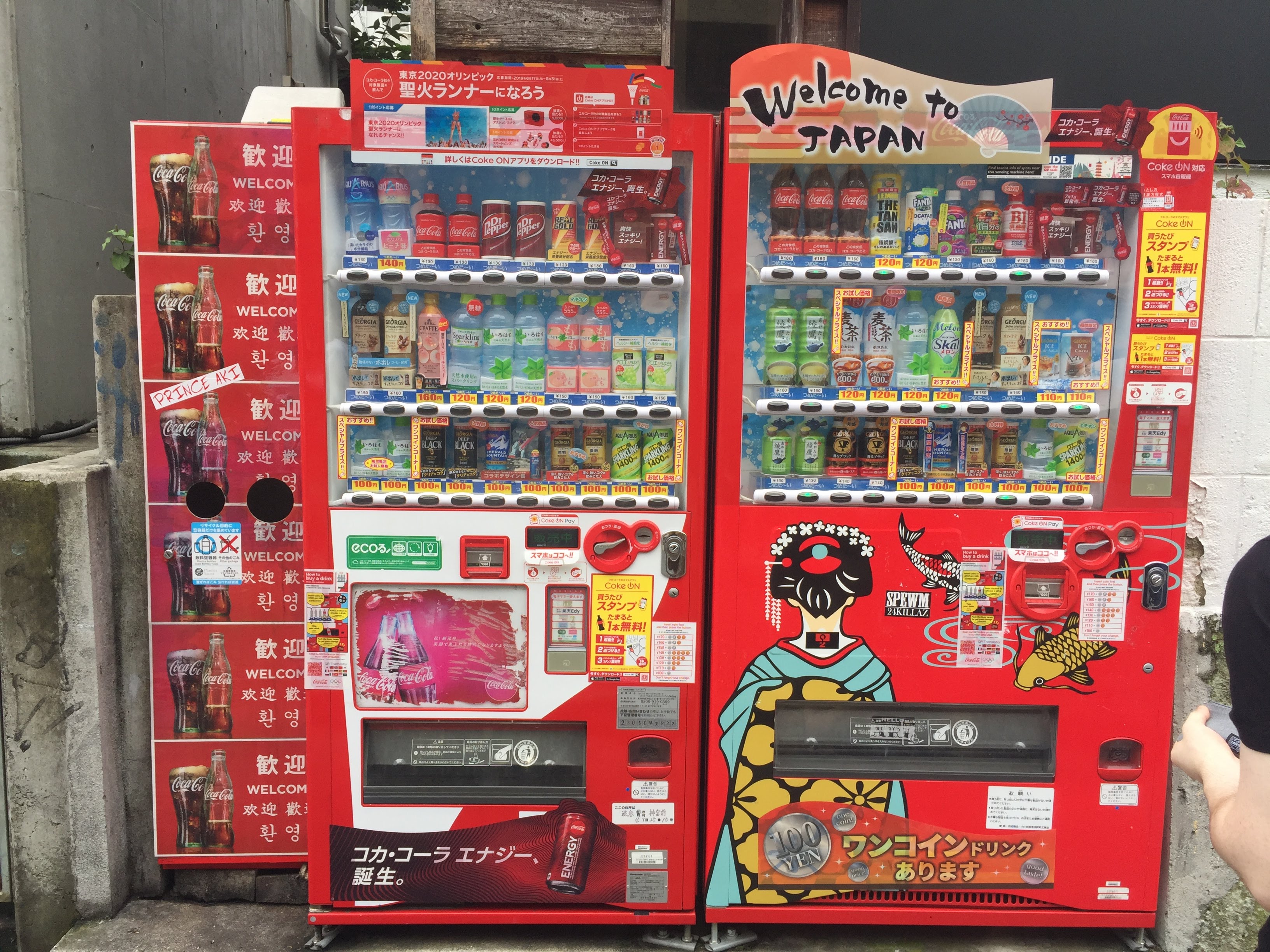
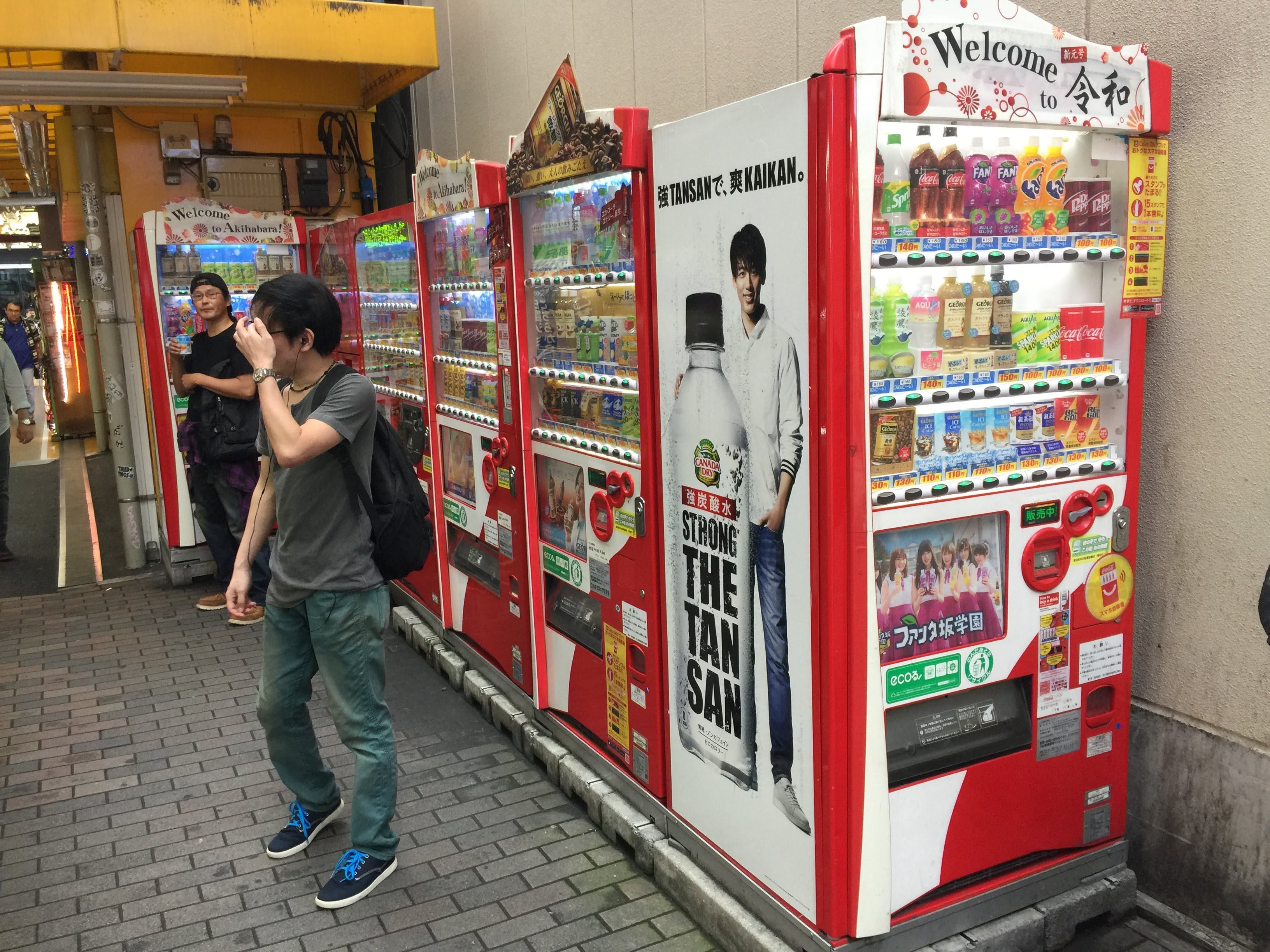
A huge string of vending machines, locaked in Akihabara, Tokyo.

One feature of Tokyo that seems a little outlandish upon arrival is the constant presence of vending machines. Their purpose is pretty straightforward – you never need to look far to find a drink somewhere – but I find it a little bizarre nonetheless. Do the Japanese just value convenience or efficiency more than we do in the US? Is it a business strategy to save costs for business owners by allowing them to have fewer employees? Perhaps do customers prefer the experience of using a machine over the polite pleasantries of a shopkeeper?

After spending a little over a week in Tokyo I have come to the suspicion that it’s somewhat a combination of all of these, in addition to the fact that Japan has a much higher average population density than the US.

Particularly as a foreigner who speaks almost no Japanese, I can certainly say they have been tremendously convenient – but not only because of the language barrier. In fact, the question I more so have now is, “why aren’t these so prevalent in the US?” when they clearly churn out a lot of business and offer great convenience here. The density of the machines here actually seems to increase their popularity, as pedestrians can always rely on finding a machine nearby to accommodate their thirst. Their frequency also appears to drive prices down, and the costs and offerings remain very consistent across Tokyo. The prices also closely match those found in convenience stores for the same drinks.

As it turns out, there are a few reasons, culturally, why Japan is an ideal place for the wealth of vending machines found. Urban sociologists, such as Yoshimi Shun’ya (2000) and Kitada Akihiro (2011), have reported that the development of much of Tokyo has been shaped by commuter and commercial infrastructure. The areas we’ve been visiting in Japan are good examples of the way these spaces are reflections of local ways of life, notably that they are heavy traffic areas for busy commuters and shoppers – perfect locations for vending machines.

A vending machine found near the busy streets of Harajuku marketed to foreign tourists

The placement of vending machines is generally chosen by local business owners. The machines typically work on a franchise-type system, where tens of thousands of yen will be used to purchase a machine that will stay in a location of your choice and provide you with services to refill the machine and a significant portion of its profits. Additionally, vandalism is a rare occurrence in Japan, and machines can be placed in even secluded areas without much fear of damage or graffiti.

From discussions I’ve had in Japan, I’ve learned that workweeks in Japan are excessive in comparison to what we experience in the US – typically a 60 hour per week minimum but sometimes reaching higher ends of 100 hours. In this context, it makes intuitive sense that these exhausted commuters want nothing more than the bare minimum amount of interaction in finding sustenance at the end of a long day. Lunch breaks typically start at noon sharp and last an hour, leaving a limited amount of time for finding food during these times as well.

Another view of the same strip of vending machines in Akihabara featured above, complete with a gentleman enjoying his newly purchased beverage.

It’s customary to avoid eating or drinking while walking in Japan, and another way these machines fit neatly into Japanese culture is by being extremely space-efficient and providing an area to stand in while you enjoy your purchase. Trash receptacles, which are generally rare in Japan, are also commonly found next to the machines to provide a full conclusion to the experience.

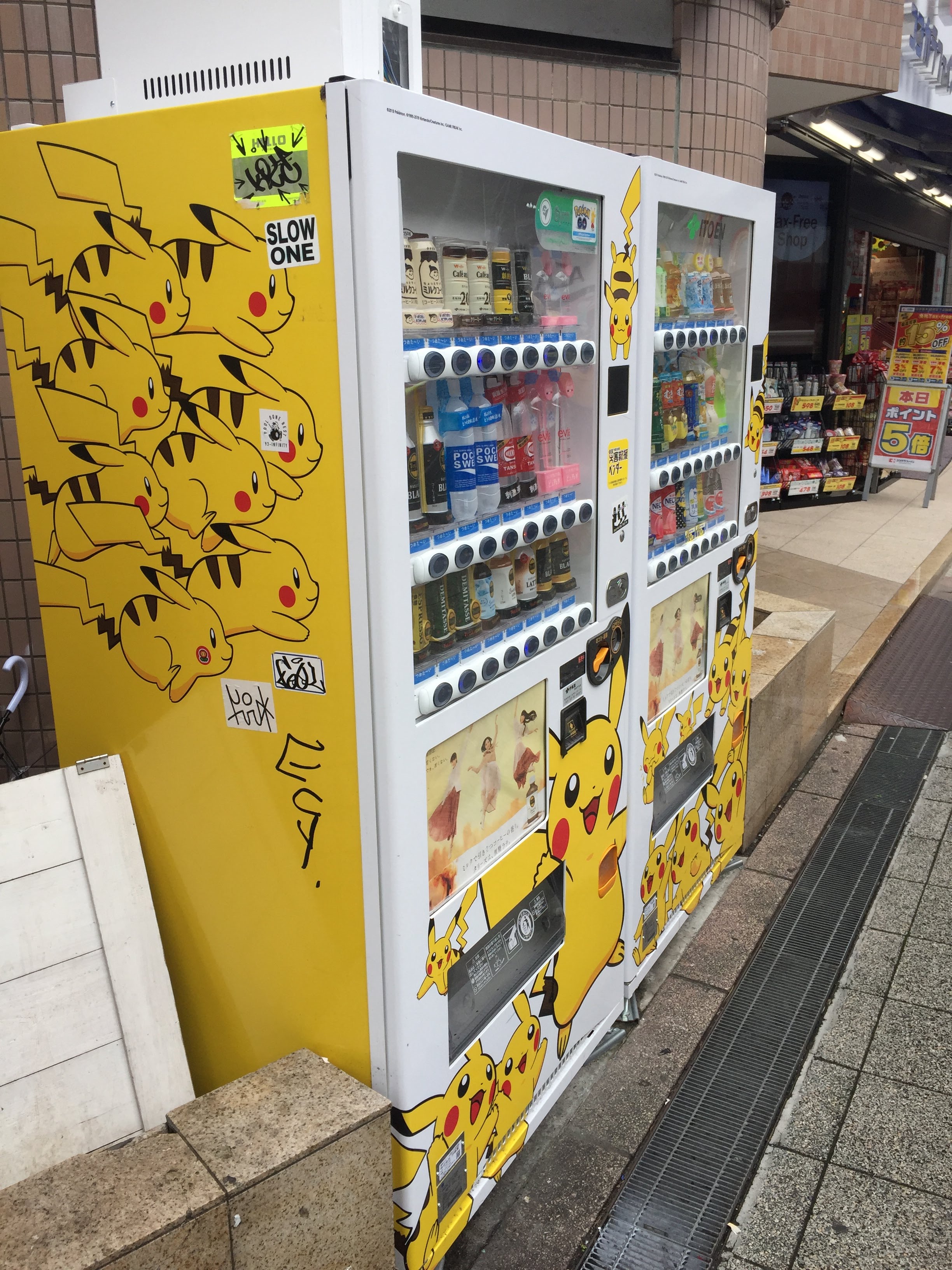
These vending machines are also perfect places to capitalize on selling a certain image or concept alongside the product itself (which are often completely unrelated, such as the adorable Pikachu drink vending machine pictured above). Machines also prominently display Coca-Cola and other American brands to incorporate an exotic feeling into what is otherwise an ordinary drink purchase.

Japan also places an emphasis on privacy, and many of the more exotic vending machines capitalize on this by offering the opportunity to buy a product where nobody can actually see your selection. More embarrassing items like otaku merchandise found in Akihabara or lingerie/condom vending machines near love hotels capitalize on this fact to increase their sales.

While I don’t think I lament the lack of lingerie machines in the US, I would love to see half as many vending machines around as one does in Tokyo. Japan, though, is definitively well-suited to the practice of placing one (or twenty) on almost every street and it’s not a mystery why the same is not true in the States.

Works Cited

Joy, Alicia. “10 Interesting Facts About Japanese Vending Machines.” Culture Trip, The Culture Trip, 24 Jan. 2017, theculturetrip.com/asia/japan/articles/10-interesting-facts-about-japanese-vending-machines/. Accessed 16 July 2019.

Live Japan. “5 Reasons Why There Are So Many Vending Machines in Japan – LIVE JAPAN.” LIVE JAPAN, 2019, livejapan.com/en/in-tokyo/in-pref-tokyo/in-tokyo_suburbs/article-a0000372/. Accessed 16 July 2019.

Too Adorable to Not Eat

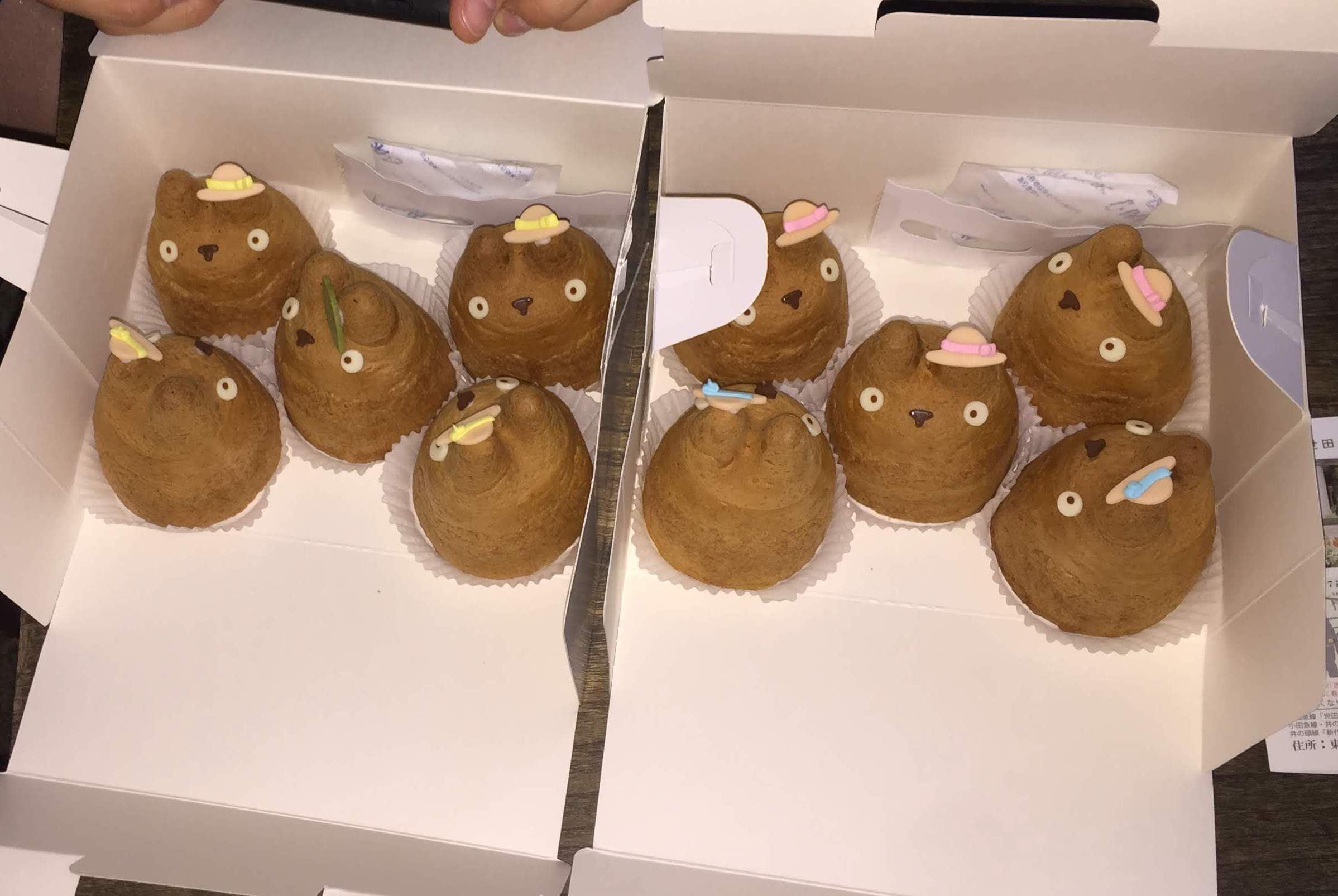
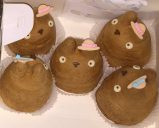
Totoro Cream Puffs from Shirohige Cream Puff Factory

The idea that a bakery could exist with limited selection of goods within Tokyo was at first a little lost on me. City real estate is typically outrageously expensive, and small bakeries are not generally known for generating a ton of money. Yet, in the quiet and somewhat secluded streets of Setagaya, a tiny little shop of Totoro-shaped baked goods has been operating since 2007.

Once you’ve made the journey out to the bakery, which is about a 15 minute train ride from Shinjuku station, and ordered your cream puff, it becomes much more obvious how this quaint bakery thrives on a remote side street in Tokyo. The treats are absolutely delicious, come in an array of eight different flavors, and are reasonably priced (which really just means you’ll want to order a lot more than one). The tiny candies that make up the eyes somehow seem to say “please eat me”, despite your initial reluctance to do any potential harm to something so adorable. The cuteness goes full circle – instead of cherishing the creature you just want to eat it right now.

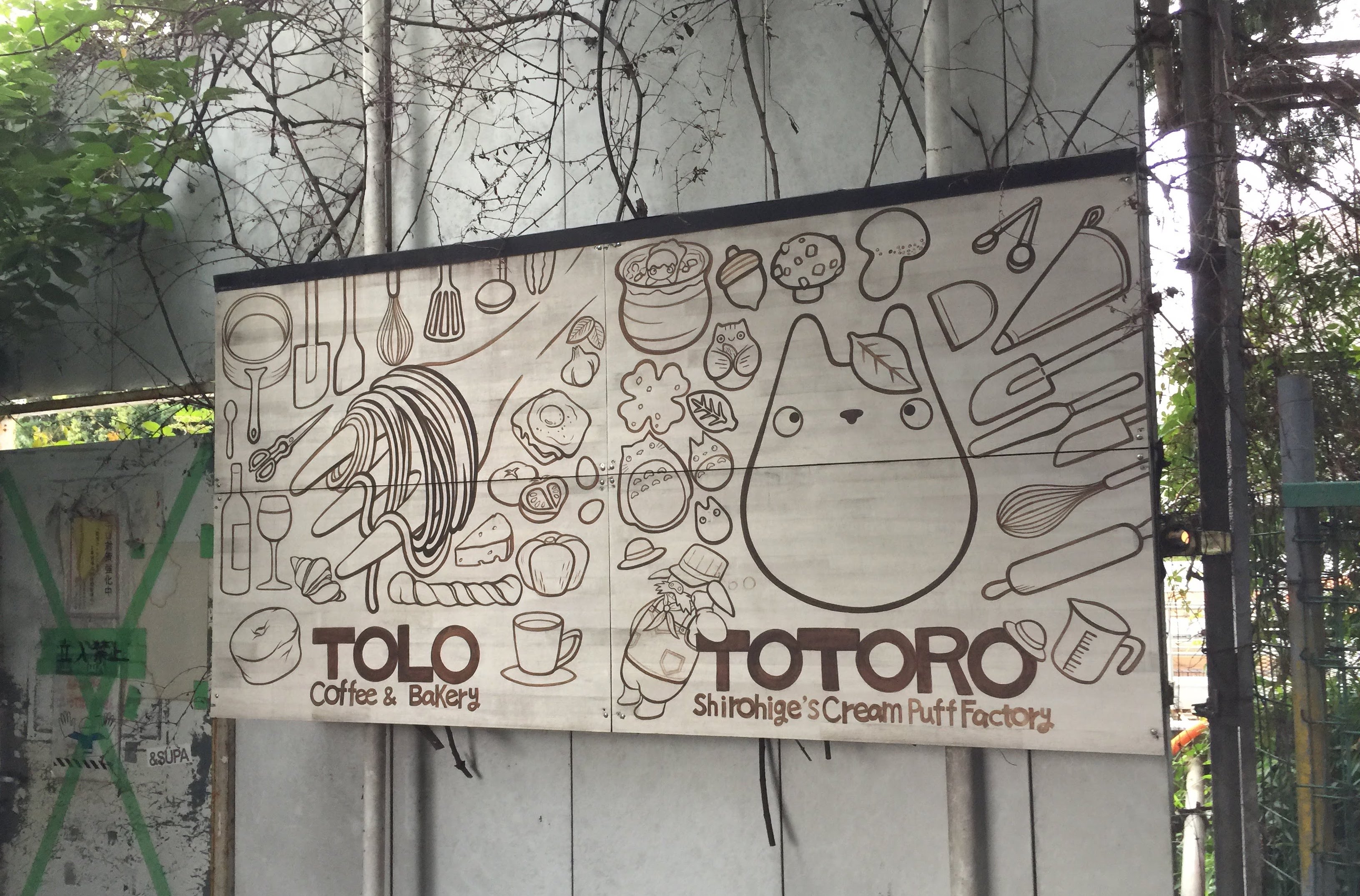
Main sign for the Cream Puff Factory alongside the coffee shop and bakery upstairs

The shop originally opened in Takanami on May 5, 2007 and moved to its current location in 2013. Despite its remote location almost devoid of foot traffic, it has seven full-time employees and enjoys a steady stream of tourist customers. They rely almost exclusively on the sale of their cream puffs, but also sell cookies in Totoro’s likeness and sell cakes with their creampuffs as the centerpiece. The remote location is likely intentional, as the environment the shop is in greatly adds to the experience. In sharp contrast to the busier parts of Tokyo, the shop is located in a cozy residential area, with enough surrounding trees around to almost make one feel as though they’ve left Tokyo and entered a forest (where one might find mini Totoro willing to have you devour their heads, apparently).

These cream puffs are part of an enormously expansive kawaii culture, and it exemplifies the massive success and intense fandom present around Studio Ghibli. When put in context of the sites around the world that have sprung up as tourist destinations for no reason other than their likeness to settings in Studio Ghibli features, it becomes clear how such a business manages to thrive in such a niche.

References:

PAFU Inc. “白髭(しろひげ)のシュークリーム工房.” Shiro-Hige.Com, 2019, http://www.shiro-hige.com/. Accessed 12 July 2019.

Yelp. “Shirohige’s Cream Puff Factory.” Yelp, Yelp, 28 May 2019, https://www.yelp.com/biz/白髭のシュークリーム工房-世田谷区-2

Design a site like this with WordPress.com
Get started