
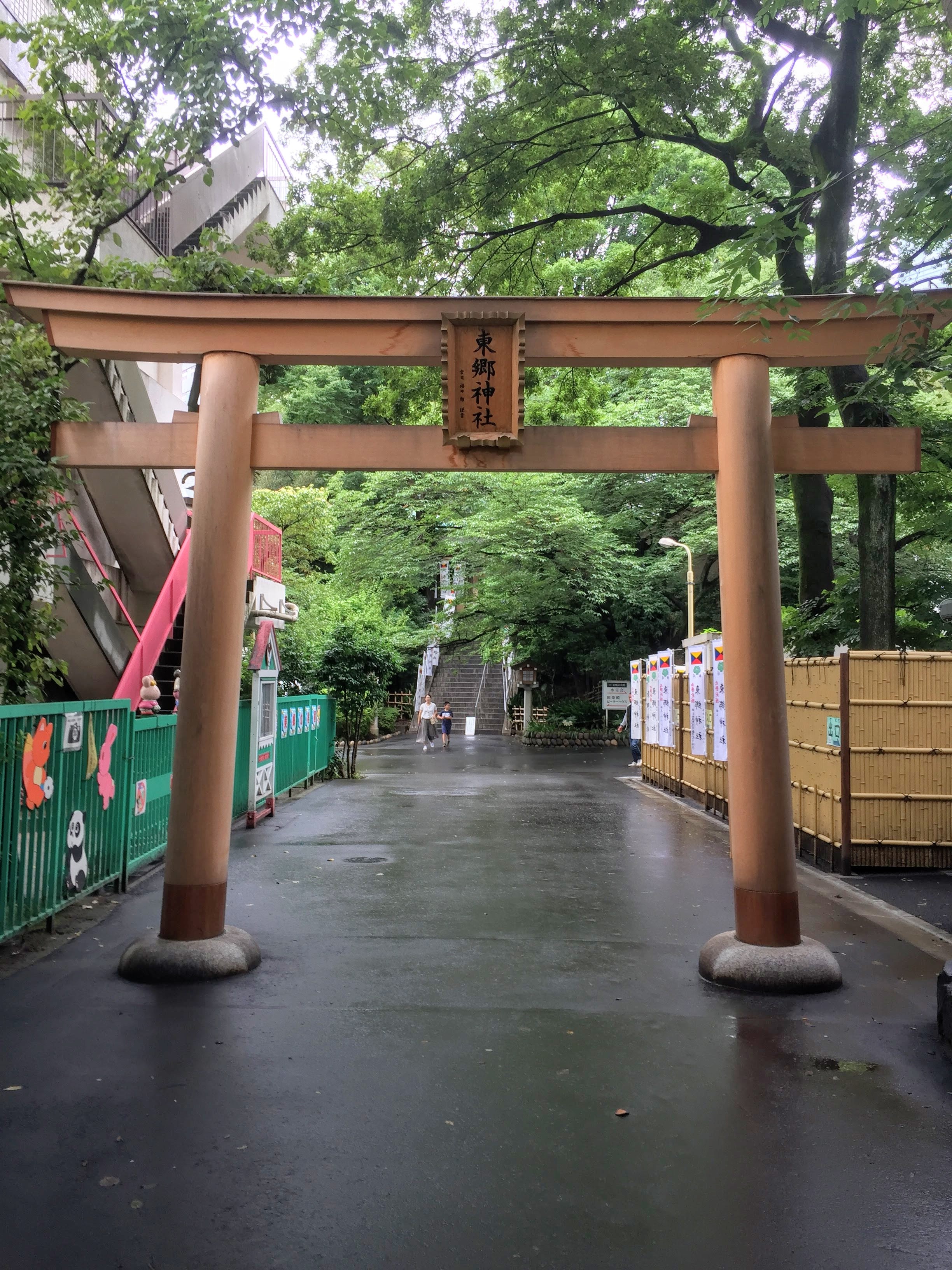
In my short time in Japan so far, I have come across two Shinto shrines. These places of worship can be found across Japan, but the one found next to Takeshita Street was particularly striking. A hundred meters away from the packed, bustling streets of shops and pedestrians, the atmosphere shifts dramatically. Suddenly, few people can be found, and the area becomes nearly silent. Pass under the Torii gate pictured above and walk up a set of stone steps and it seems like you’ve entered another world. I wondered how such a stark contrast is preserved.
This shrine is known as the Togo Jinja shrine. There is nobody there to maintain the shrine or watch over it, yet the space is immaculate – giving the impression the kami itself maintains the space. This location contained a number of features common to these shrines, each containing its own purpose.
Shinto shrines are places of worship that can be found across Japan, and while the structures found at them can vary dramatically, Torii gates are one of the most commonly present. They represent entrance to a sacred space and they intuitively invoke a sense or importance even to someone without an understanding of the religious ideas they represent.
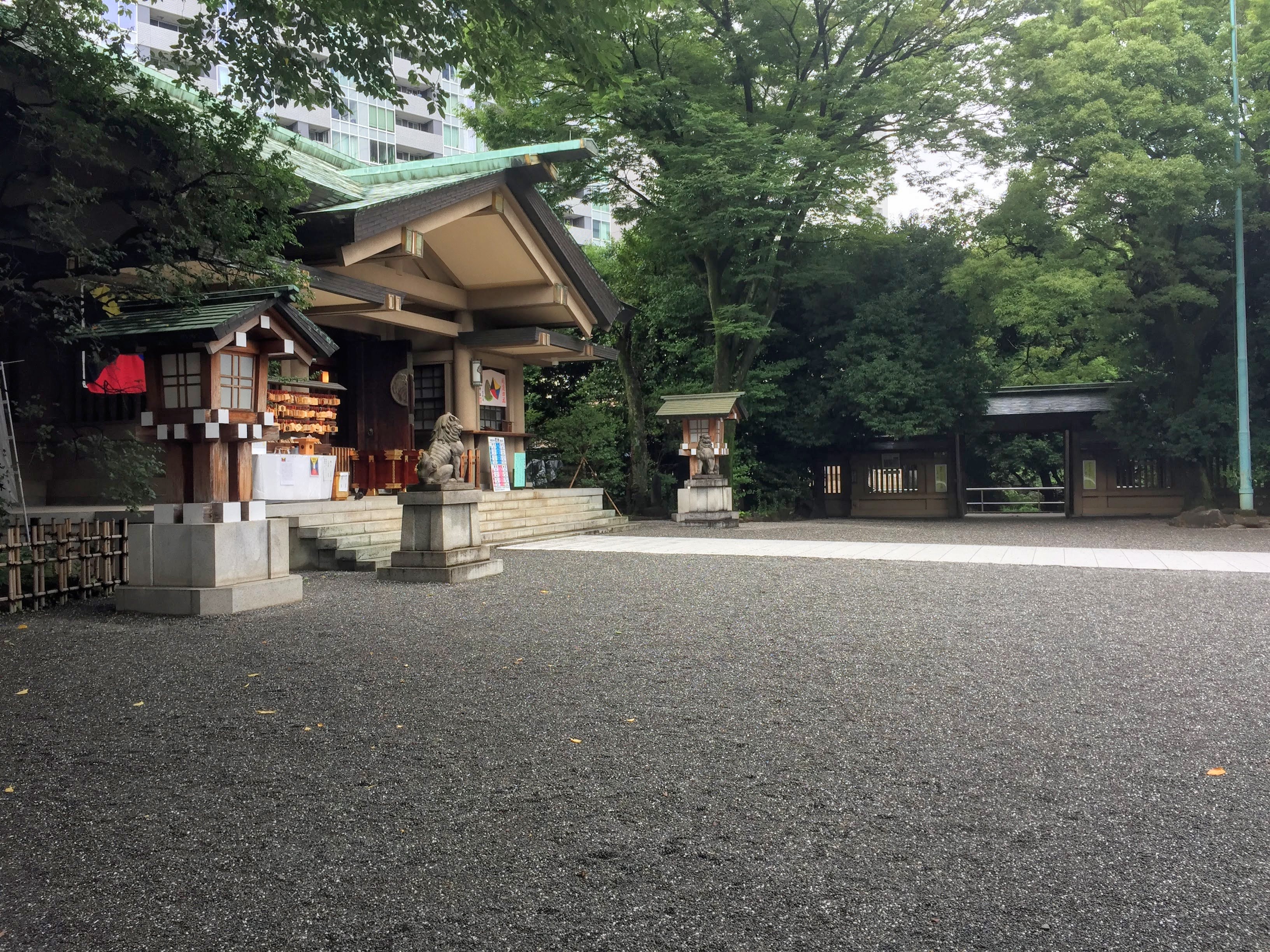
After a significant set of stone stairs through the tamagaki, the fence surrounding the sacred inner space, we were met with an open courtyard. Here, the innermost features of the shrine are present. To the left, the haiden can be seen, where worshippers can make an offering and pray to the kami. Outside of this building is a donation box, or saisen-bako, where one tosses money before making a ritualistic prayer to the kami inside.
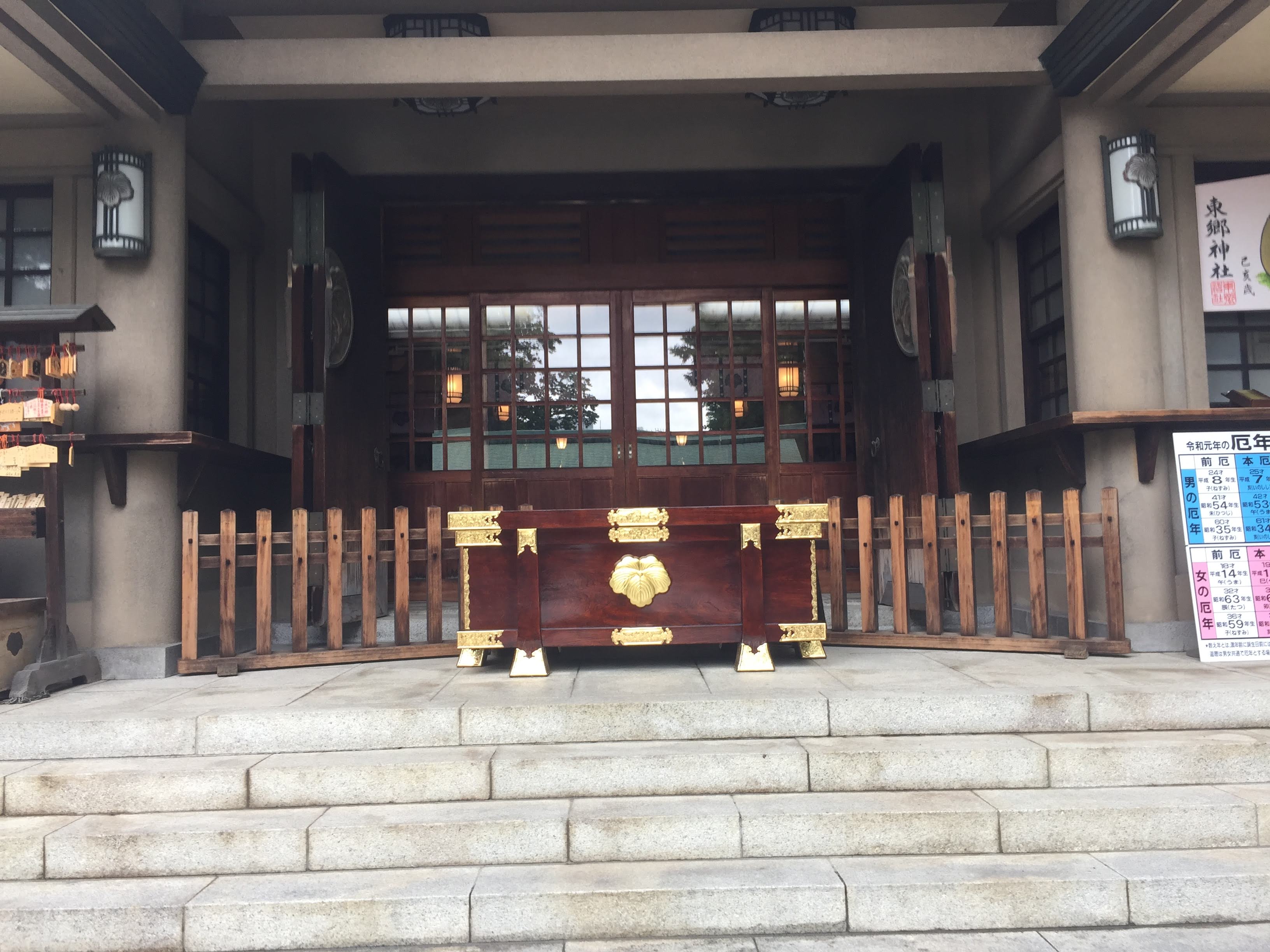
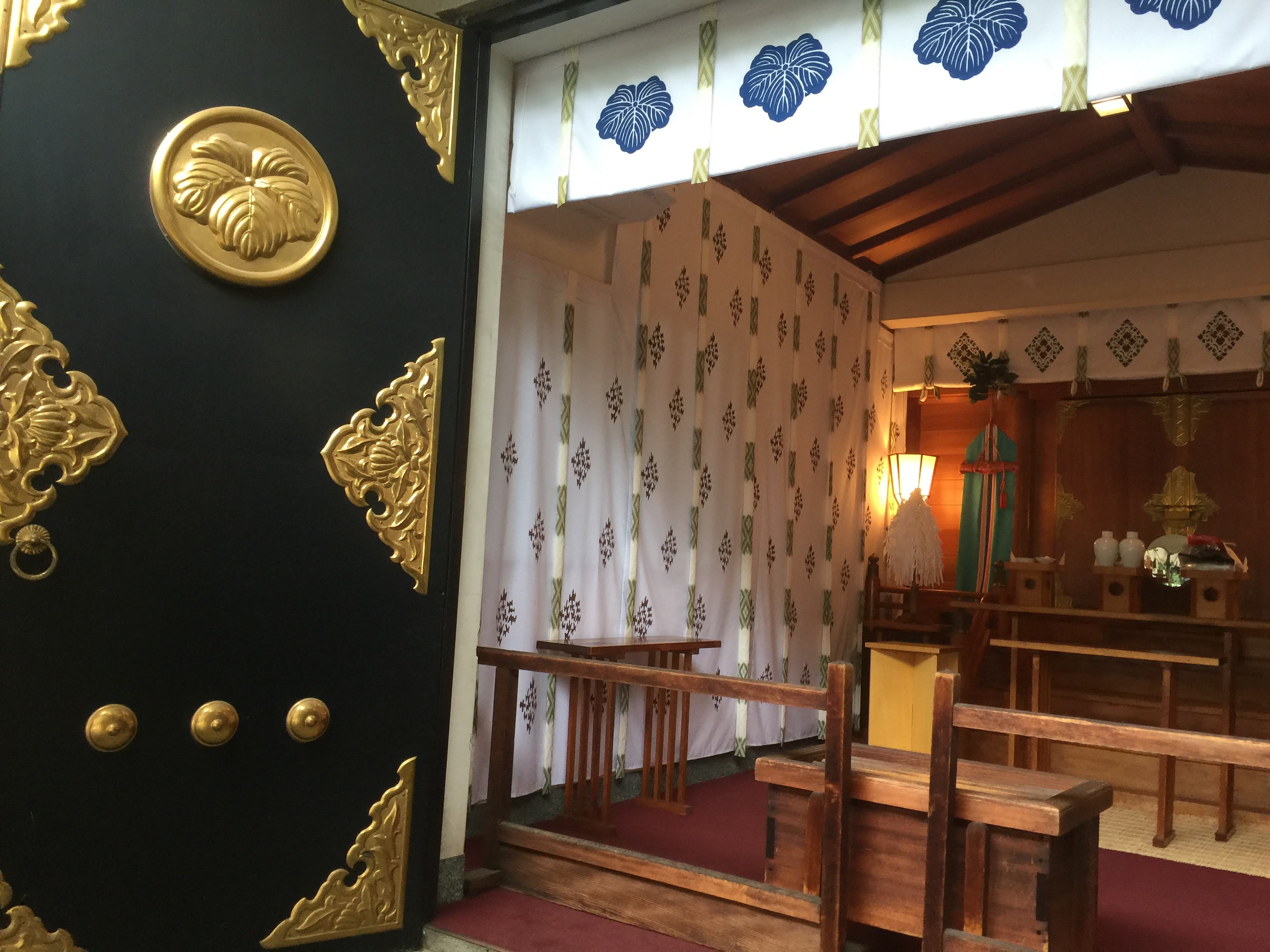
Above are the haiden and honden, which are not always separate, however they are in the Togo Jinja shrine. The honden, where the sacred objects that house the kami are kept, is off to the far left, out of frame of the courtyard image above.
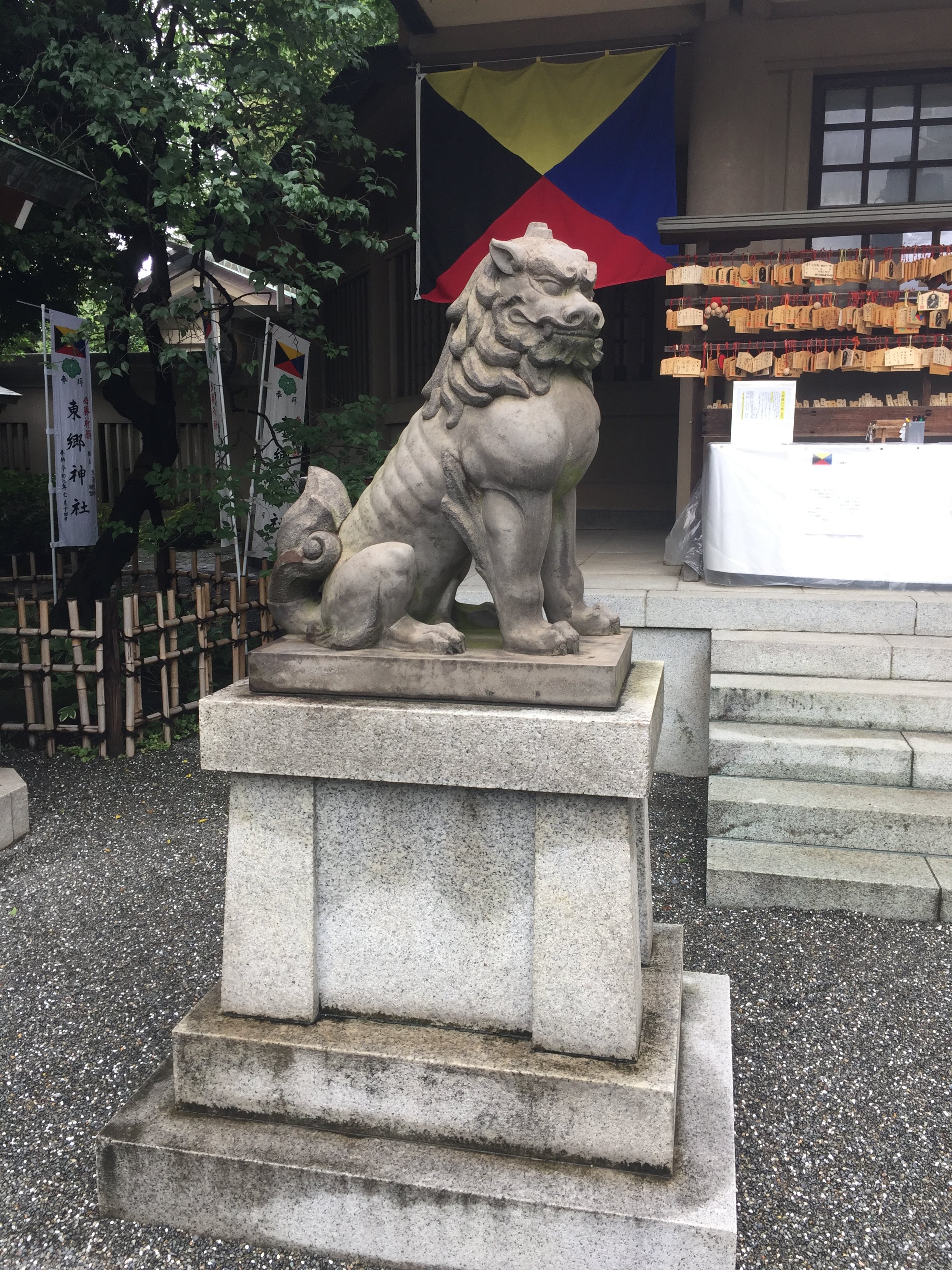
The lion-dog (shishi) statues outside the haiden are known as komaindu and are believed to ward evil out of the temple. One shishi is intentionally depicted with its mouth open in a silent “a”, while the other is closed in a silent “um”, to represent a perpetual sacred Buddhist utterance of “aum”.
Shown here behind the komaindu is an ema, where wishes of good fortune, such as in love or business, are left in hopes of gaining the kami’s favor.
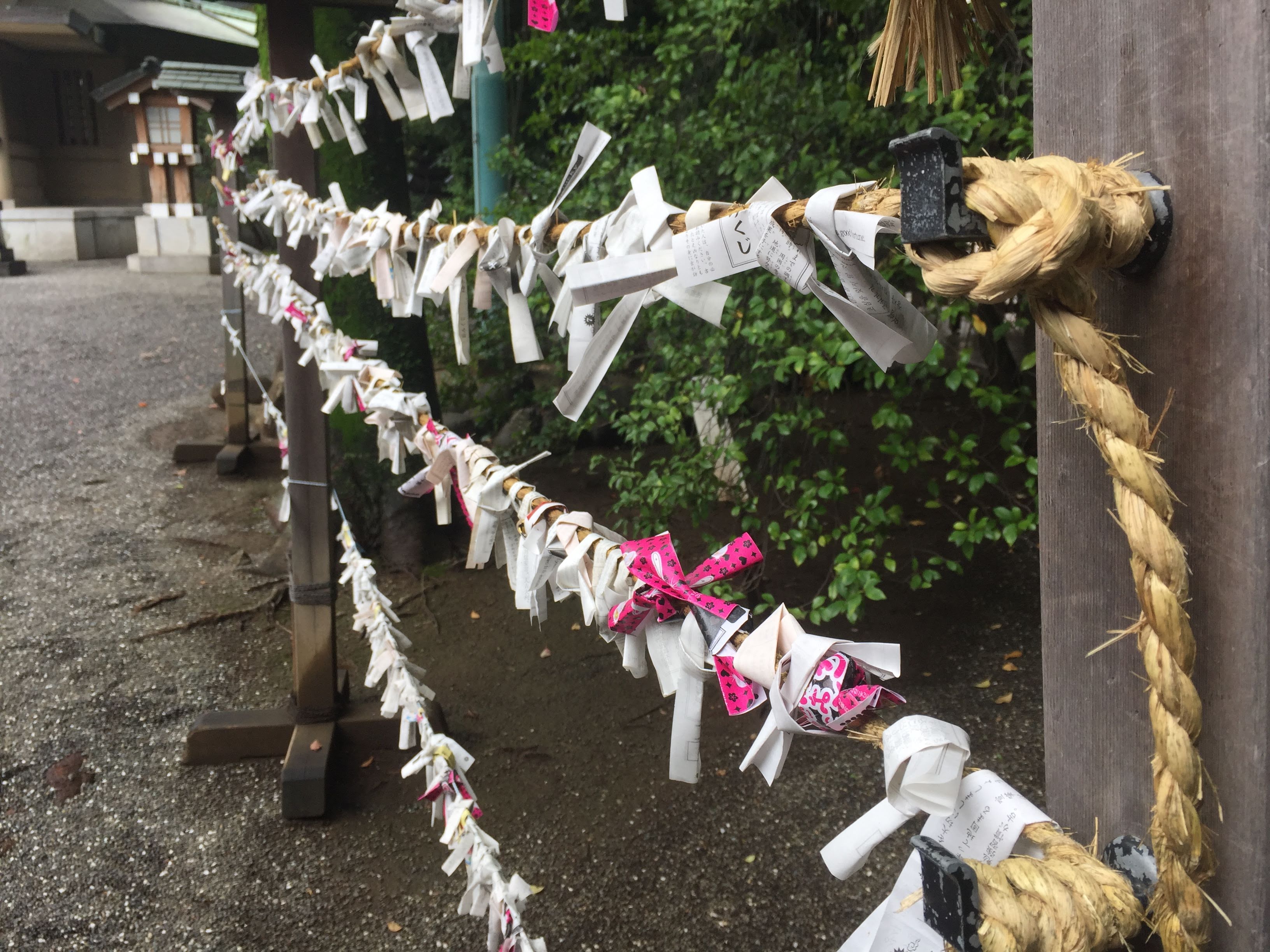
One particularly intriguing feature of the shrine was a rope with a large collection of papers tied onto it. The papers are omikuji and are fortune-telling strips of paper, that in this shrine can be purchased by unattended boxes a capsule machine nearby. The slips can foretell good or bad luck in varying severity, but tying the slip to a tree or sacred rope within the temple is believed to benefit the receiver regardless of their fortune. Above we see a large collection of these tied to a series of ropes within the courtyard.
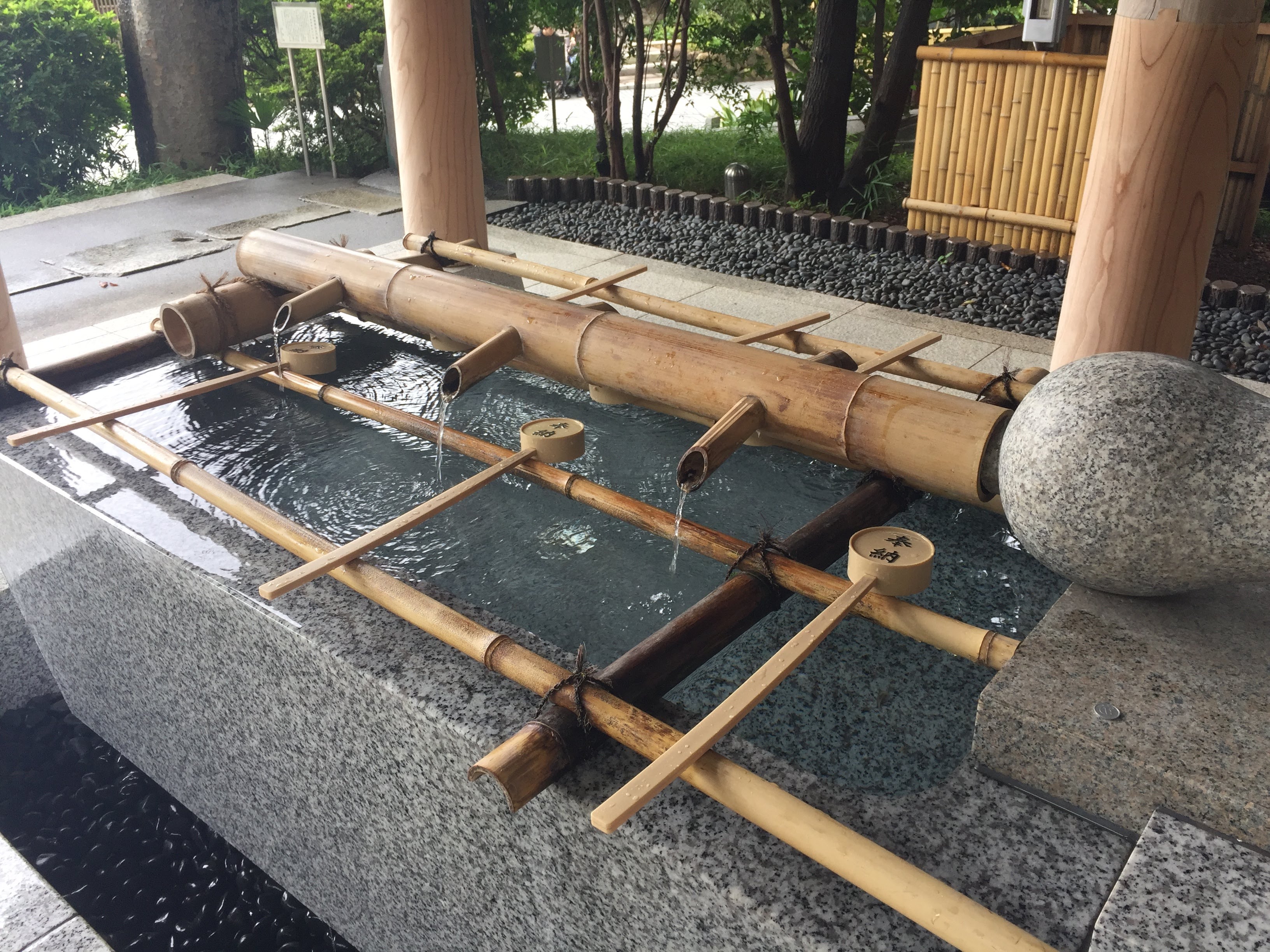
Through the doors to the right of our original entrance, is a cleansing trough, or temizuya. I was struck by the ornate design of the fountain and the calm manner in which it was routinely utilized. These are typically fountains or natural springs and are a location where one ritualistically cleanses oneself prior to entering the shrine. The ritual most often consists of picking up the ladle with one’s right hand and rinsing the left, changing hands to rinse your right hand, changing hands again to pour water into your left hand and rinse your mouth, followed finally by tipping the dipper up to rinse the handle before placing it back. It’s important to make sure the water you use to cleanse runs out to the sides of the fountain to ensure the maintained purity of the fountain itself.
While none were witnessed during our time here, the shrine itself is maintained by one or more Shinto priests, who routinely maintain the sacred space, collect donations, refill the omikuji supplies, and close the shrine in the evenings. Special events are held here as well, such as new years celebrations. While the stark shift in atmosphere between Takeshita street and Togo Jinja can be surprising at first, walking through the shrine and taking the time to observe the features within imparts an aura that demands respect, even for those who are not followers of Shinto.
Works Cited
japan-guide.com. “Shinto Shrines.” Japan-Guide.Com, 17 Apr. 2018, http://www.japan-guide.com/e/e2059.html.
Manabu, Toya. “Insider’s Guide to Shintō Shrines.” Nippon.Com, 2019, http://www.nippon.com/en/series/insider%E2%80%99s-guide-to-shinto-shrines/. Accessed 21 July 2019.


 Culture in Japan
Given that Japan is so limited in space and how tightly packed Harajuku is, I can imagine that there would be a few people interested in getting rid of the shrines and building more stores around the area. Do you think the decision to preserve these shrines were made only to have a quiet space? Or do you think that it was mainly to preserve Japan’s history? Or is it something else entirely? I personally think that it has to do with preserving history but am curious to see what you think.
LikeLike
I think it definitely has an appeal as a space where it’s extremely quiet in stark contrast to the rest of Harajuku, but ultimately I think the real reason it’s managed to stay here is due to the cultural importance of the Shinto religion in Japan. These shrines function as centers of culture where events are held and they have a lot of historical significance.
LikeLike
With the mass amount of people that we saw at Harajuku, yet such little numbers of people who actually enter the shrine. Do you think this has to do with the modern generation? Or does it have to deal with the high increase of tourists in Harajuku? And do you think this low amount of people wanting to go to the shrine will have a major impact on the shrine health, and the longevity of the shrine being able to sustain itself there?
LikeLike
Well, I think the quietness of the area helps draw people in. It’s a bit of a tourist attraction itself, especially because it’s so quiet in stark contrast to the streets around it and it has a lot of historic culture there. Religion is important to a lot of people and it prevents Harajuku from just appearing like it’s a giant outdoor mall.
LikeLike
I think it’s interesting that there are so many shrine in the middle of a busy city and they didn’t disappear in the modern. What relationship do you think the young/modern generation with shrine? What is the shrine use for in the modern day beside a worship place? I am guessing that people will host different seasonal festevial.
LikeLike
I can’t say I saw any young people there (except some tourists) during the 30 or so minutes I was exploring it, but it may simply be something that people don’t get into until they’re older. That said, it’s likely very important to some people and it represents a lot of historic culture. Weddings are held at this shrine and the local priests host some festivals here as well, like during New Years.
LikeLike