
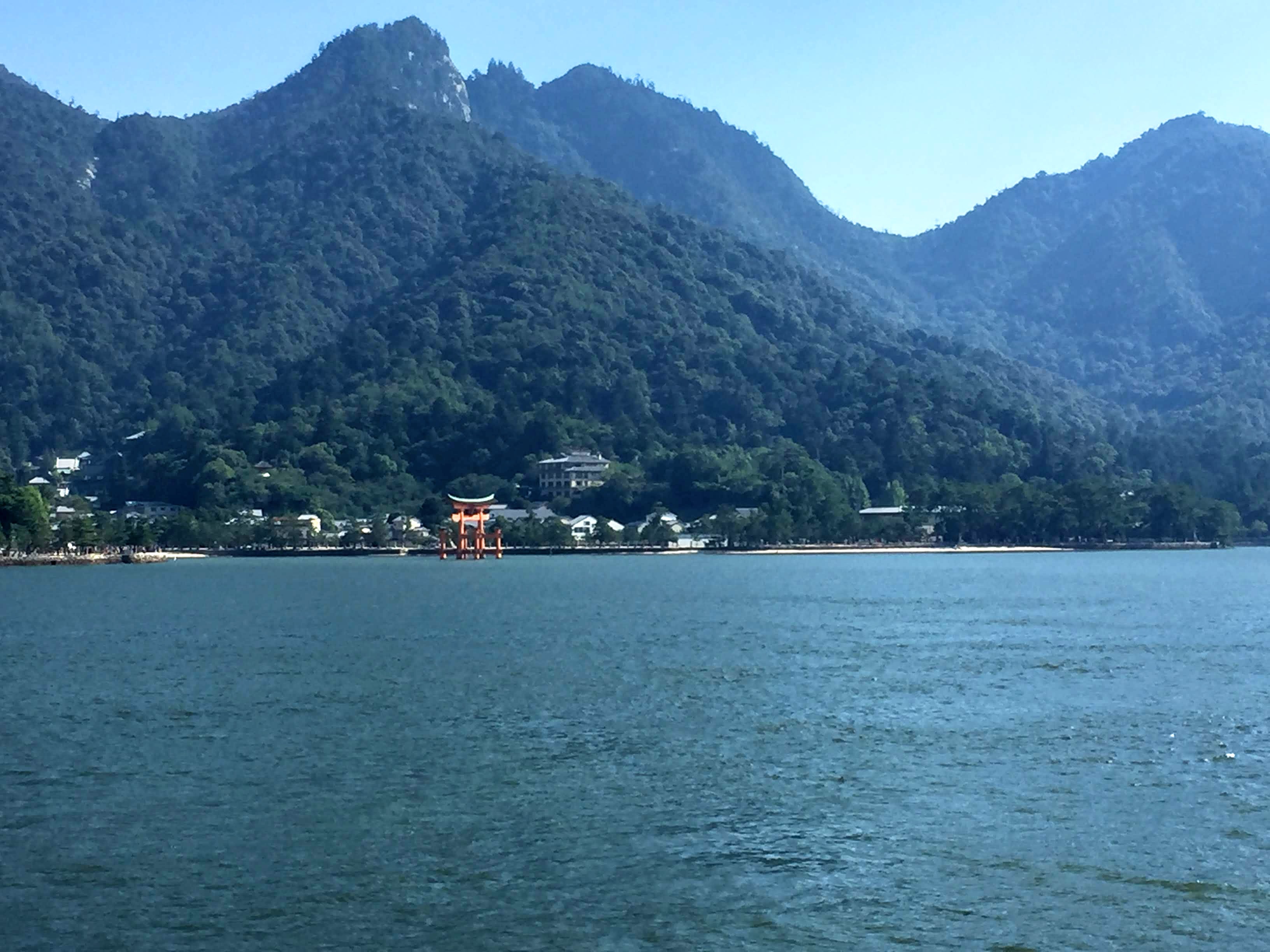
My time in Japan thus far has been mostly spent in and around major metropolitan areas where the horizons all consist of giant buildings and monuments. It was refreshing to see another side of Japan on the island of Miyajima, where mountains and sea coast replace the skyscrapers I have been used to thus far. It was also particularly interesting because of the prevalence of Japanese tourists visiting the island alongside us and to see areas that were not particularly designed to be English-speaking-tourist-friendly. The island presented a particularly distinct type of Japanese culture that is unique from what one finds in the busier districts of Tokyo and Hiroshima, where there is an emphasis on nature and Japanese historic culture (particularly the Shinto religion).
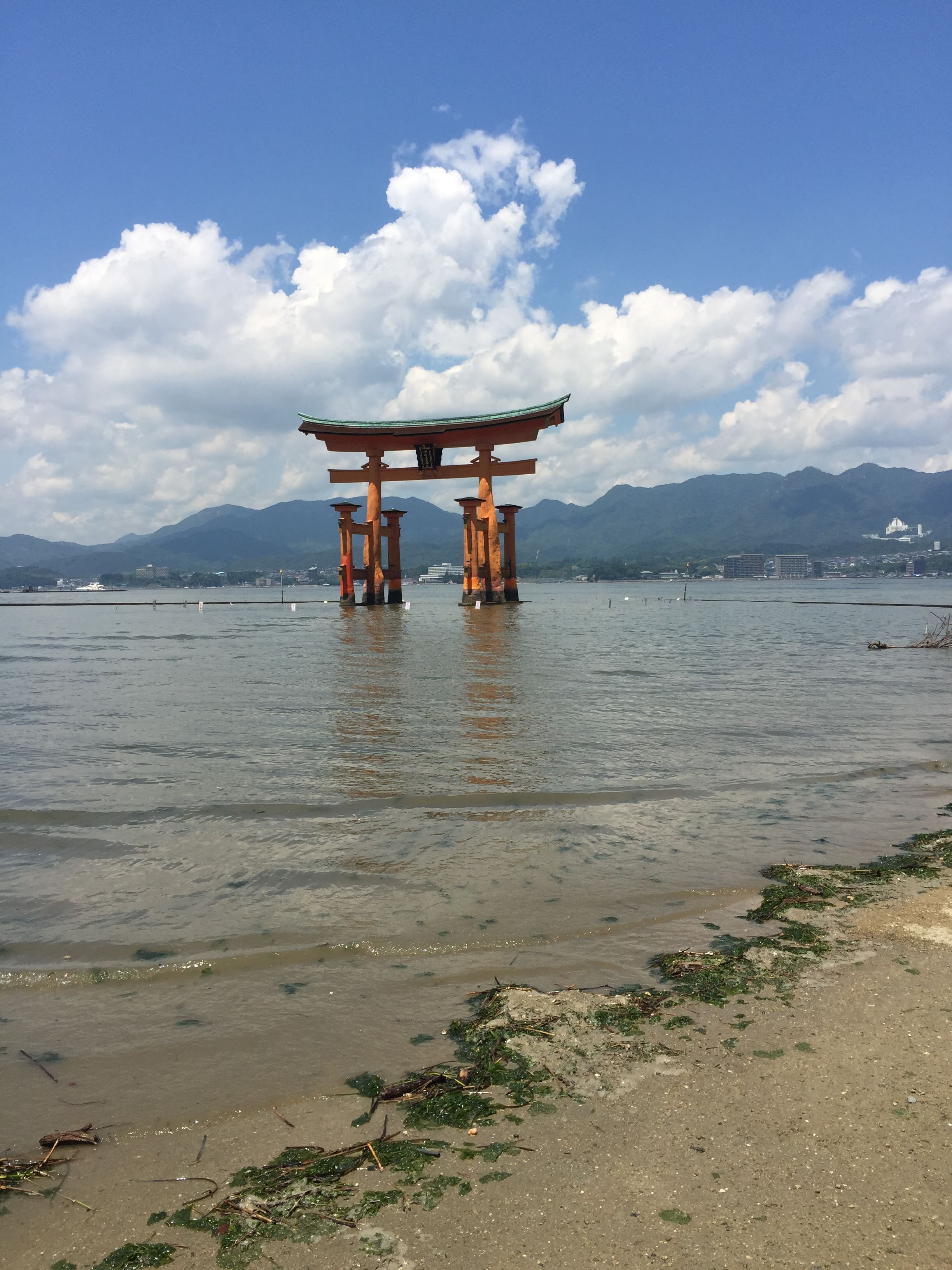
The name Miyajima literally means “shrine island” in Japanese, and even before you arrive via the ferry you can see a large Torri gate offshore. Most of the island appears to be wilderness, except for the docks and collection of shops and restaurants nearby at the base of the mountain. It was quite hot and humid, but the weather otherwise was fantastic for walks outside.
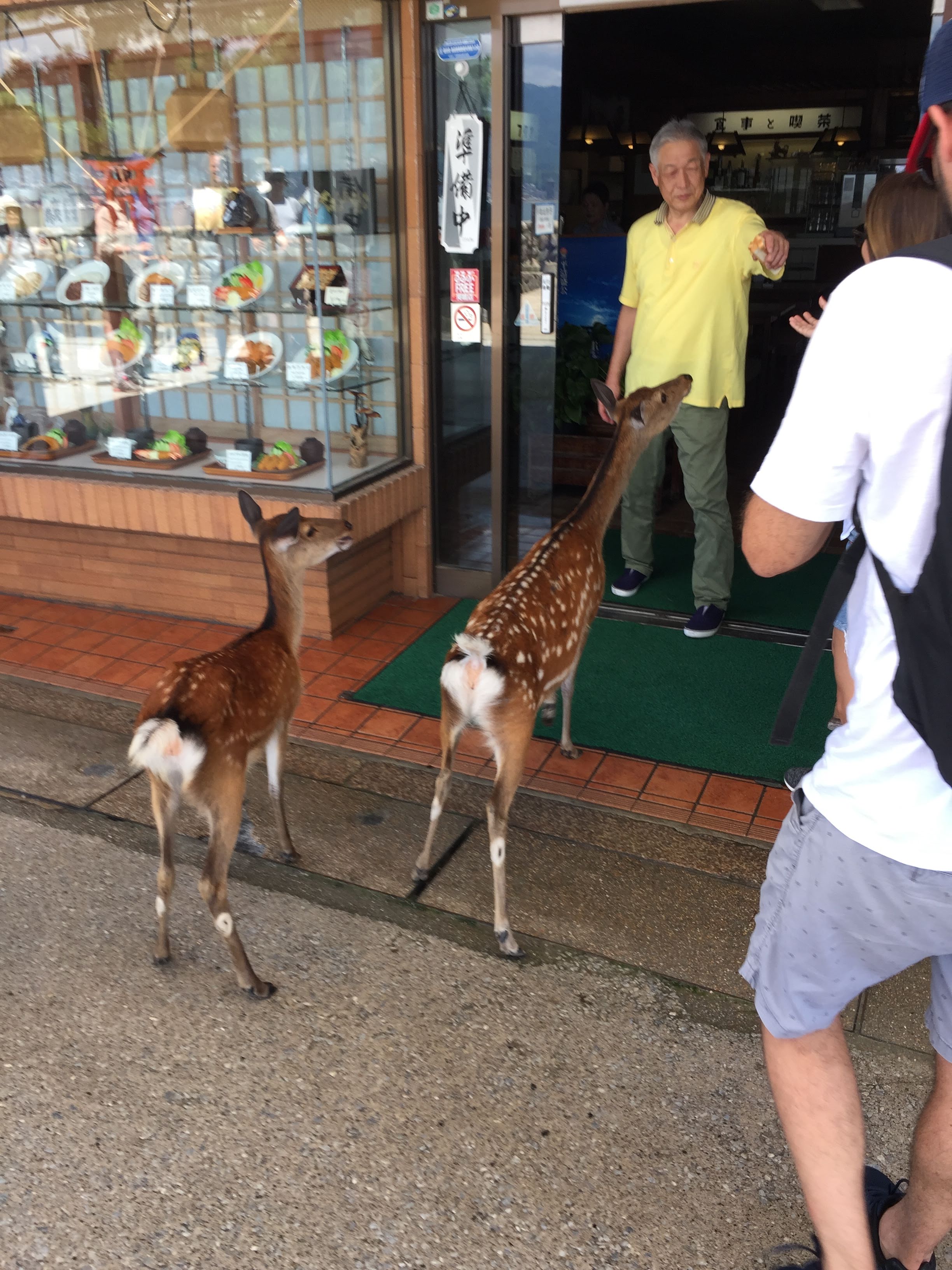
Deer are everywhere once you get off the docks. They’re not at all shy and are definitely used to being around people and look towards them as a source of food. I’ve never seen a deer so up close before, so it was fascinating to see them just chilling out with crowds of people around them. I pet them and enjoyed hanging out with them until I found some that were a little more aggressive than others in their desire to get food out of you.
The deer also have an obsession with plastic bags and other trash and have a bad habit of trying to eat anything they could find. When I crouched down to one to try and get a picture with one of the deer we came across, he immediately poked his head into a pocket of my backpack and yanked an empty bag I was carrying around to put trash in and started trying to eat it. He did not appreciate me trying to stop him from doing this but luckily did not feel the need to try and bite me or use his antlers.
All the deer I saw were juvenile and still had spots on them, but many did still have sizable antlers. The same deer that tried to eat my bag followed us around for a little while we got some food. During this time, he was mildly aggressive towards other deer that tried to come around, presumably trying to gain exclusive access to any food we had to offer (which was none, as this deer sucked). He also bit someone’s shirt and used us as scratching posts for his antlers, which was annoying. This guy pretty much killed the fascination with deer for us and we never ended up feeding any, coming to the conclusion that it’s pretty much just encouraging bad behavior.
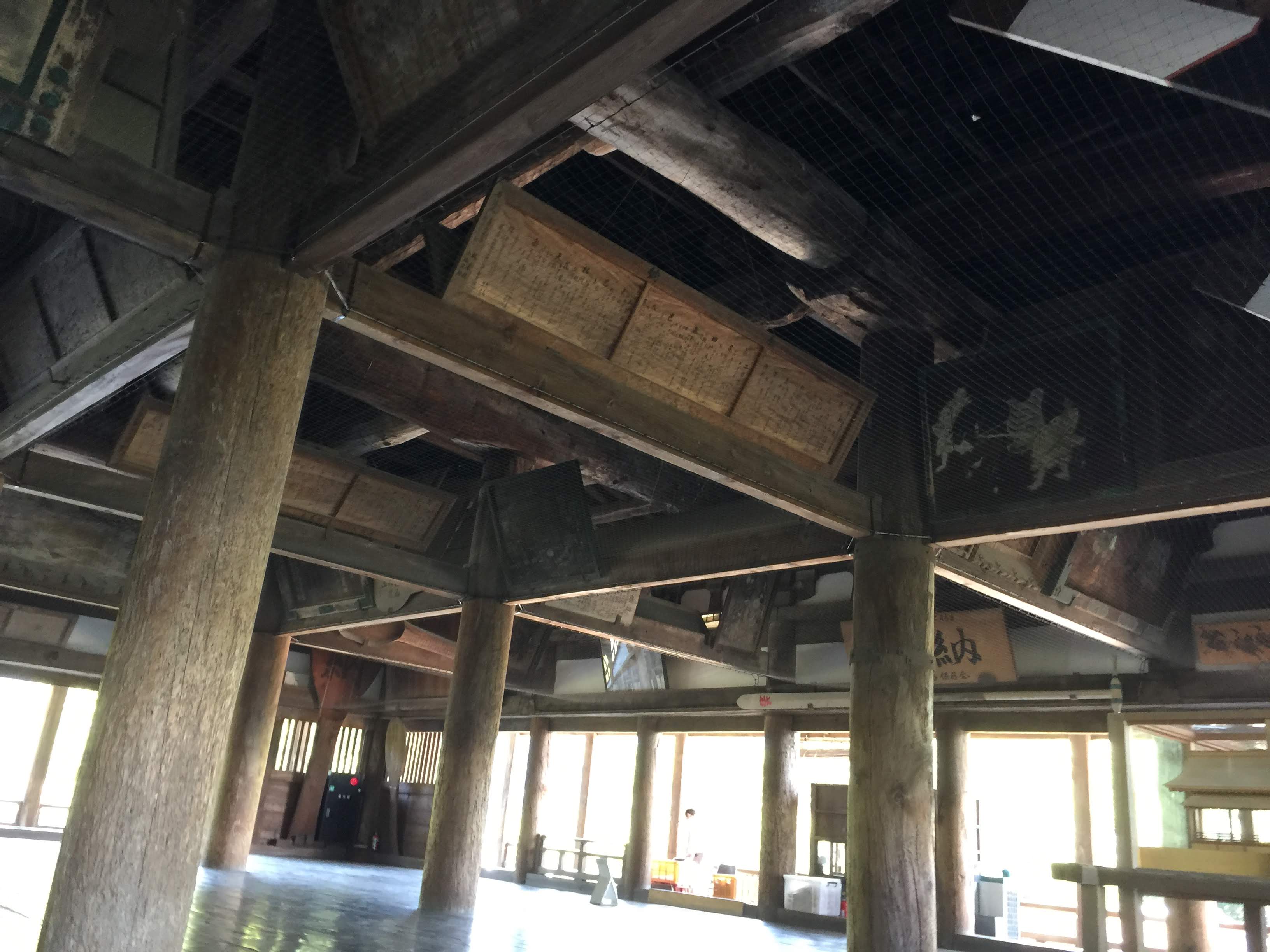
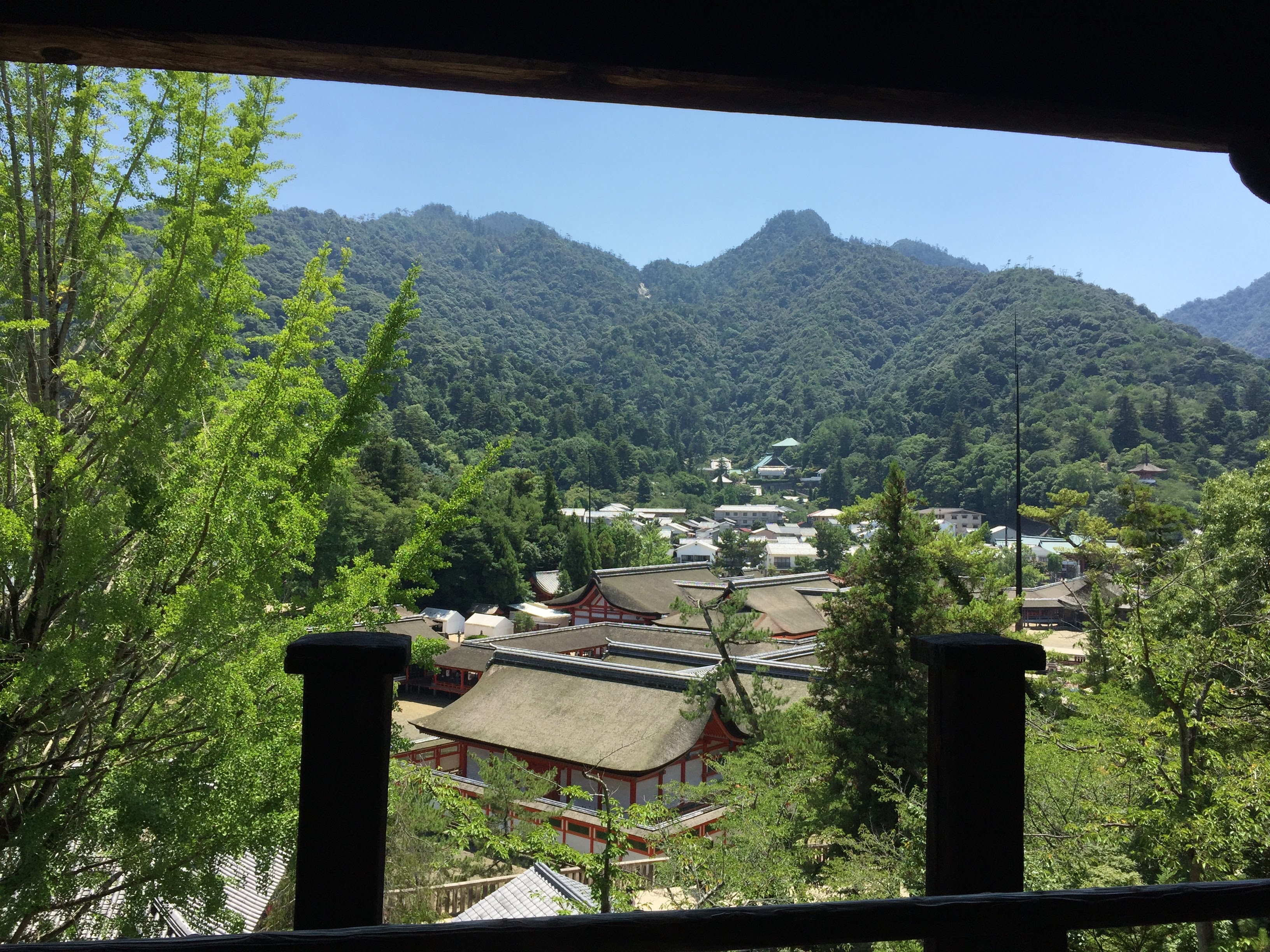
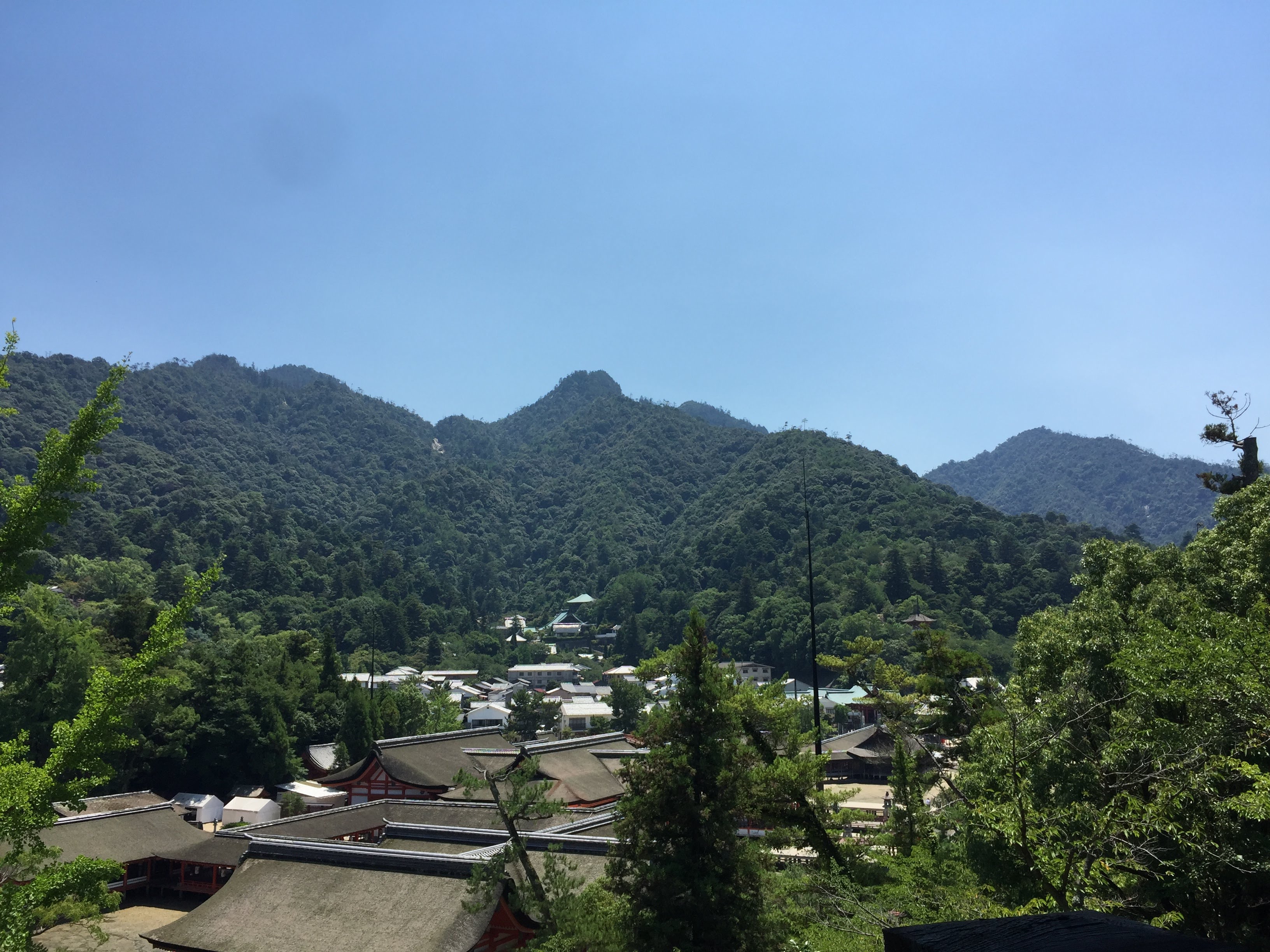
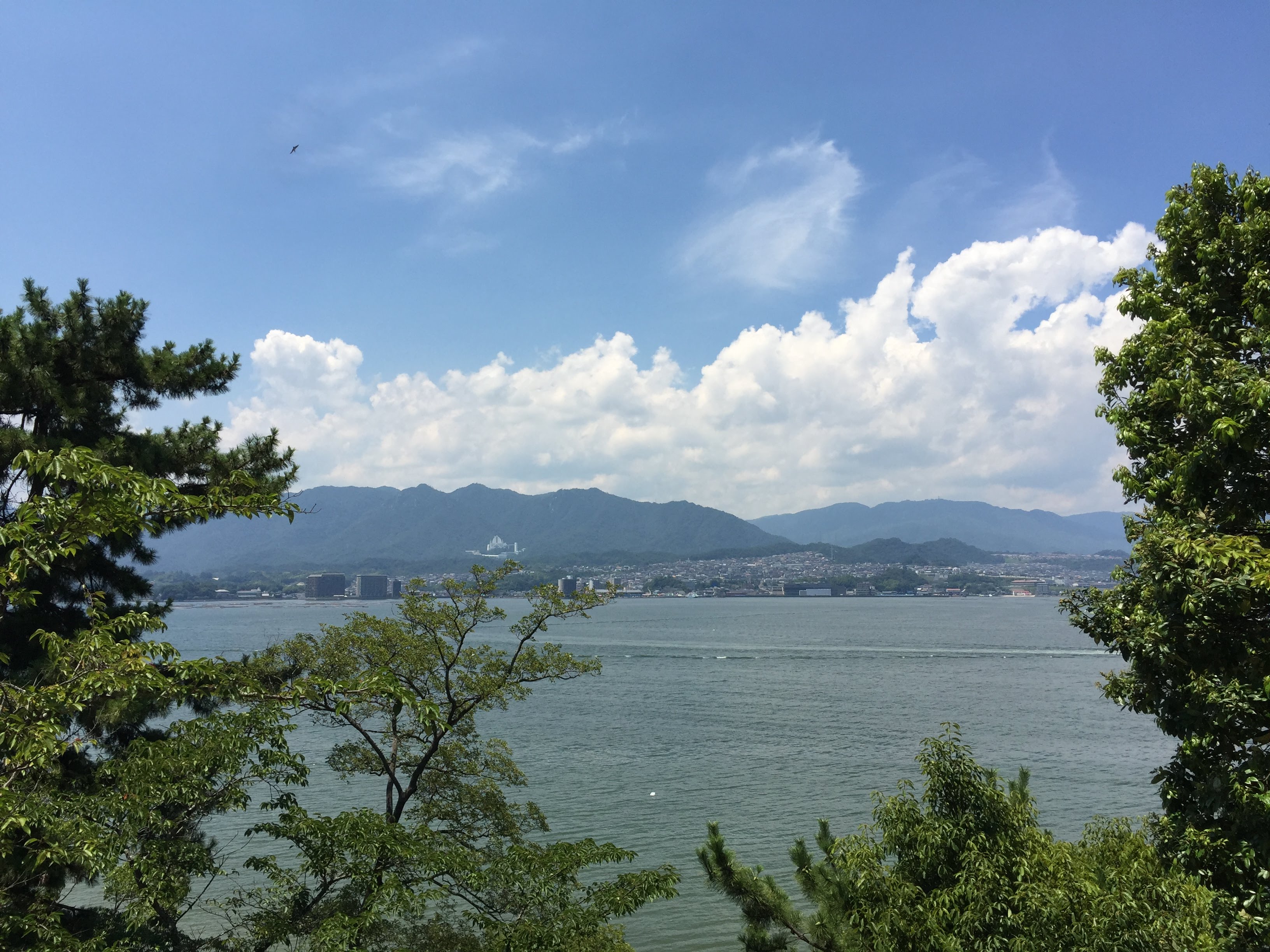
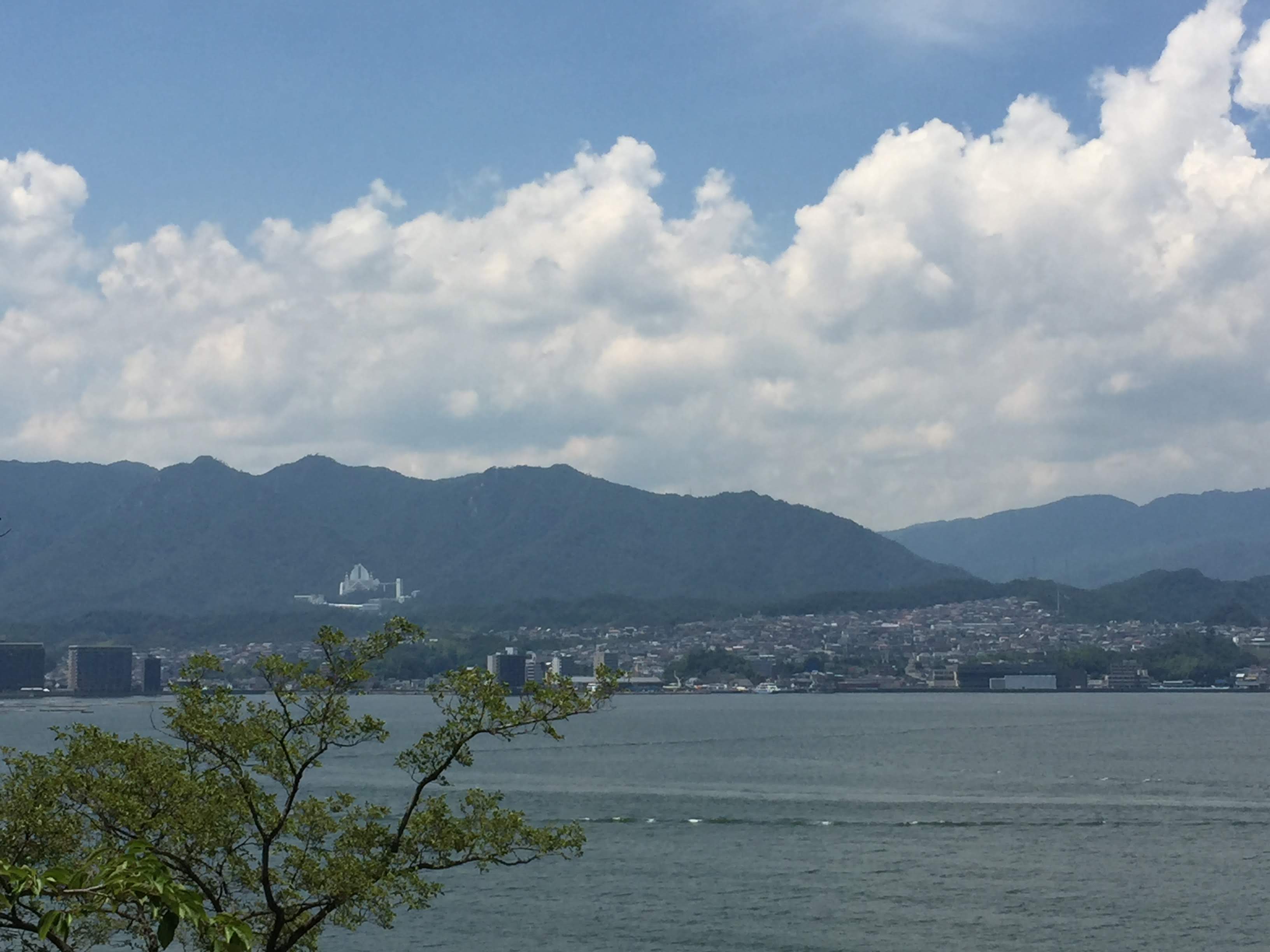
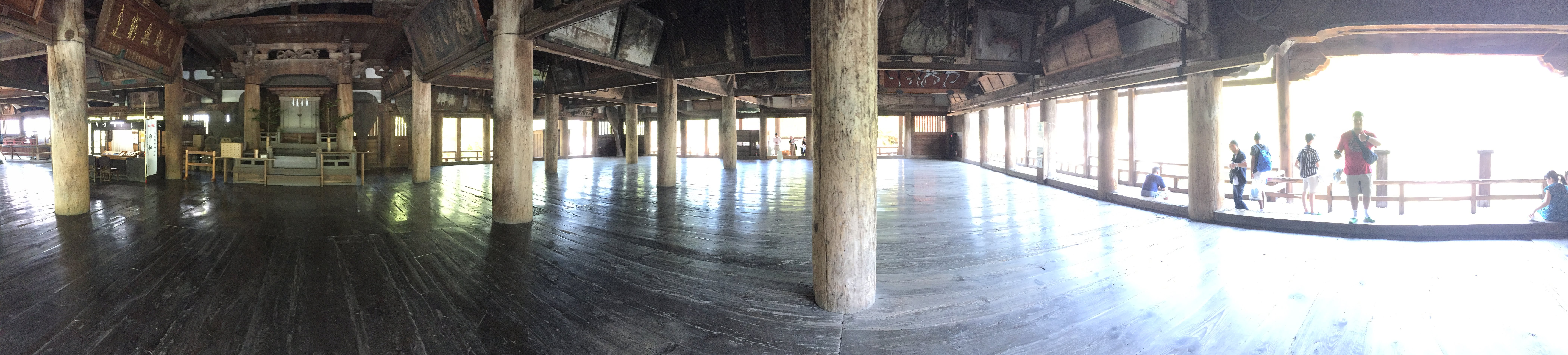
In addition to some overly pushy deer (that were pretty fascinating nonetheless), the island also had numerous shrines and paths through nature. At the top of a hill there was quite a large shrine that was built with gigantic tree trunks and had an incredible view of the surrounding area. It cost 100 yen to enter and you had to remove your shoes, but it was definitely worth it for the views alone. The shrine itself was inexplicably calming and we were accompanied by a number of elderly Japanese couples just enjoying the quiet atmosphere, very old looking paintings, huge rice paddles and views of the surrounding area.
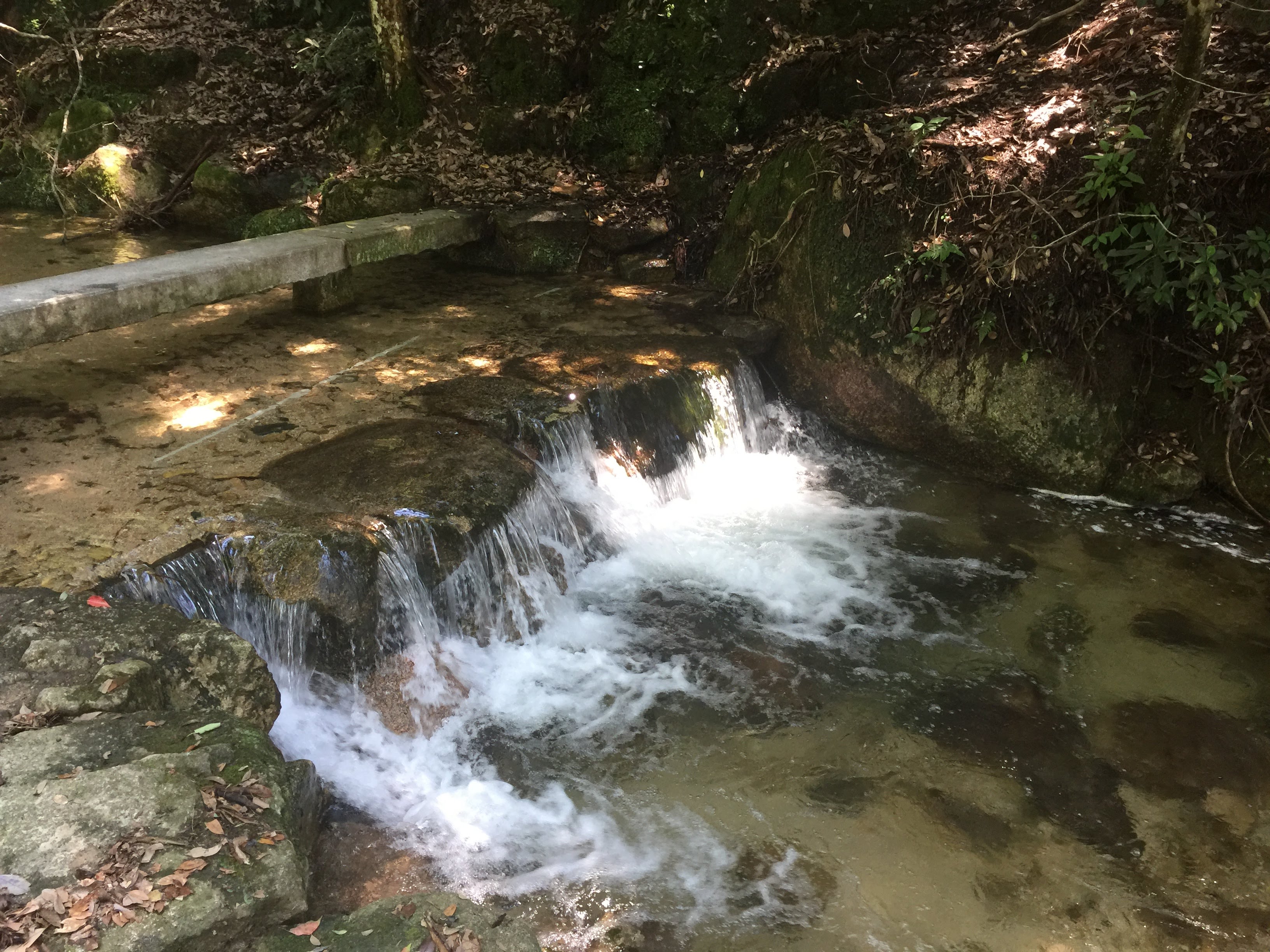
We also traveled through a beautifully serene pack along a river filled with waterfalls, at least some of which were at least partially man-made. There were also stone walkways across the river which gave great views of the waterfalls and a few scenic arch bridges. It also gave us an opportunity to splash our faces with some cool water, which was fantastic.
The island was a fascinating peek into Japanese domestic tourism. There were some additional Shinto-based attractions, such as a sacred rope park, that we did not get around to seeing, but sound extremely interesting nonetheless. It’s certainly a different side of Japan than what one can see in the major cities and is definitely worth exploration.


 Culture in Japan
You mentioned that Miyajima was a nice escape from the metropolitan cities in Tokyo. So I was wondering, do you think that Japanese tourists come here for the same reason as well? Or is it mainly just for the shrines and not necessarily to escape the city life?
LikeLike
I think this is also a way that Japanese consuming their own culture as there is some strong regional culture difference. As we discussed in class, domestic travel is big in Japan because they are really good at generating regional tourism. I think part of it is to experience a different lifestyle and some do go for shrines experience. Do you think this has to do with the age group? Maybe the younger generation goes for more a different culture experience but older people tend to visit more for a spiritual reason.
LikeLike
Given that the island was just a gigantic tourist attraction, I thought it was unique that it had many different attraction for different people. This leads me to believe that no matter what people were looking for at the island, from the deers to pet shops, shrines, or even aquarium its all escape from the city. Given the mass amount of activities for all ages, I think that it was a very well planned tourist trap for an entire family with or without kids or grandparents.
LikeLike